Home/Forensics/Why Forensic Memory & Storage Costs are Skyrocketing in 2026
Why Forensic Memory & Storage Costs are Skyrocketing in 2026:
Last Modified: May 28, 2026
Why Digital Forensic Hardware is so Expensive
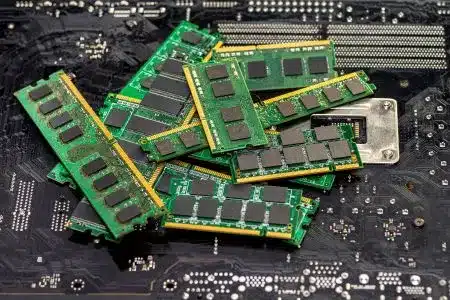
Digital forensic technology protects and serves our justice system, but with the growth of AI and data centers, forensic hardware, specifically forensic memory, is facing the largest spike in pricing history ever. Over the last 8 months, forensic workstations have jumped in price by over 120%, making memory-heavy systems harder to procure than ever before.
RAM prices are skyrocketing across the world, with forensic memory being the key for high-density DDR5, ECC modules, and AI-assisted investigations. Our guide breaks down why forensic memory and hardware costs are rising, the impact on agencies, and what Ace Forensics is doing to stabilize pricing in an uncertain market.
AI enterprises and data centers are buying massive amounts of DDR5 and ECC memory, often in multi-terabyte configurations. RAM and GPUs are both made with silicon, a material abundant in countries like Taiwan. Manufacturers of silicon are now selling almost exclusively to large data centers and AI organizations like NVIDIA, as these projects require a massive amount of RAM, leaving smaller agencies empty handed.
How the Forensic Memory Shortage is Affecting Agencies:
With forensic memory pricing at an all-time high, smaller agencies are fighting to keep their heads above water. Procurement cycles for hardware have become an extremely lengthy process, with delays in quotes now taking months instead of weeks. Agencies are running into issues with how much they are allowed to allocate towards system spending, and are, in some cases, making decisions with little information.
Some agencies are continuing to run their hardware with hopes of their systems still being efficient, leading to increased failure risk and growing backlogs, with older systems struggling to work with modern datasets. Agencies are being asked to process more evidence, at faster speeds, and with hardware that costs significantly more than last year.
Cost Breakdown: CPUs
High-core CPUs are the glue behind forensic workloads from parallel hashing to multi-thread pipelines; they are essential to the overall performance of a forensic system. As scaling demands for CPUs often overlap with AI workloads, processors are expected to operate for AI, cloud, and scientific computing workloads, resulting in a massive pricing spike for CPUs.
GPUs, or graphics cards, have become the biggest consumer component in global hardware as of 2026. GPUs that were considered “mid-range,” like the NVIDIA RTX 5070 Ti, are now facing extreme price inflation. AI model training consumes nearly all of NVIDIA’s GPUs, and NVIDIA’s supply chain is becoming constrained, leading to longer lead times for consumer cards.
Workstation GPUs are now being redirected to AI clusters and inference nodes, with manufacturers realizing there is much more to earn from data centers than from smaller agencies.
With the massive expansion of AI and data centers, memory is the core behind the pricing surge of forensic hardware. Data centers account for over 70% of all memory chips as of 2026 and AI servers are now consuming terabytes per node. Forensic systems are extremely intensive and typically require 64-256 GB of forensic memory, much larger than average consumer needs.
Though many digital forensic workstations offer 256 GB of RAM, the minimum required according to our forensic experts is only 128 GB.
Why memory is critical in forensics:
Multi-threaded hashing
Large evidence file ingestion
RAM-heavy virtual machines
AI-assisted case triage
Cost Breakdown: Storage
Unlike forensic memory or GPUs, storage has not doubled in pricing but has become more expensive, especially for forensic-grade SSDs. Storage requirements have increased with the demand for AI workloads, leaving forensic teams needing more storage than before. NAND shortages are being caused by reduced fab output and increased demand, while AI data centers continue to purchase high-endurance SSDs, leaving little for consumers.
Multi-petabyte clusters are consuming the entire enterprise SSD supply as manufacturers continue to prioritize hyperscalers, not smaller forensic agencies.
Why storage is critical for forensics:
High-speed evidence ingestion
Low-latency access
Data integrity and chain-of-custody
Parallel workflow support
How Ace Forensics Offers Affordable Forensic Systems:
When Ace Forensics speaks to a client, it is our goal to guide them with our industry expertise; we are not trying to convince the client to buy an overkill system. We are TAA-compliant, so we maintain strict sourcing standards to ensure no failures, bottlenecks, or long-term cost overruns.
Our approach allows us to provide stable configurations in an uncertain market. All our systems are configurable upon request as well, helping us provide consumer-friendly prices with matching hardware for clients’ given workloads.
How Ace Forensics protects from market volatility:
The surge in forensic memory pricing is more than just a hardware issue; it’s a reflection of the shift in how silicon, computing, and data are consumed. AI is completely reshaping the supply chain, directly affecting forensic workflows as agencies face increased pressure to process more evidence with fewer resources.
Agencies today need scalable and specifically engineered workloads, which is where Ace Forensics helps. Ace Forensics offers validated and cost-efficient forensic workstations for customers, even in a forensic memory shortage. If you have any questions or would like to speak with a member of our team, please contact us today.