Home/Forensics Blog/RAID vs NAS: Which Storage Architecture Protects Evidence Best?
RAID vs NAS for Forensics: Which Storage Architecture Protects Evidence Best?
Last Modified: May 8, 2026
Why Forensic Storage Matters
Digital forensics teams rely on fast, secure storage to analyze and preserve evidence. With datasets growing and imaging speeds increasing, the importance of choosing the right storage architecture becomes heightened. The two most common options, RAID and NAS, are often misunderstood and incorrectly used interchangeably.
Both storage options serve different purposes, but both can work together to create a resilient forensic storage environment. Ace Forensics outlines the differences between the two storage architectures, explains where they overlap, how we help you choose the right architecture for your forensic workflow, and how our forensic workstations integrate with both architectures.
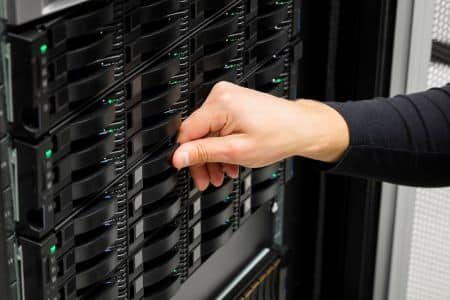
RAID (Redundant Array of Independent Disks) is a method of combining multiple drives to improve performance, redundancy, or both. It is critical to note that these redundant arrays are not a device, but a storage configuration that determines how data is written across multiple disks.
For forensic teams, this provides the redundancy and speed necessary for imaging, hashing, and multi-drive analysis.
What is NAS
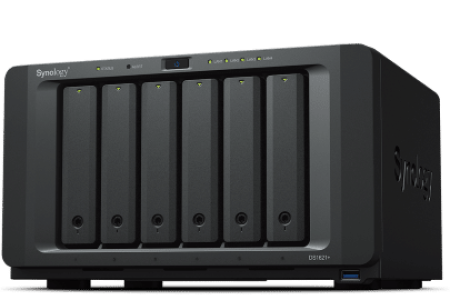
NAS (Network Attached Storage) is a dedicated storage appliance that connects to your networks and provides centralized, always-on access to files, evidence, and shared resources. Unlike external drives or direct-attached storage, a Network Attached Storage includes its own CPU, OS, memory, and network interface, allowing it to function as a lightweight server for multiple users at once.
Both storage architectures are often compared because both involve multiple drives, but both serve very different roles in a forensic storage environment. Redundant arrays of independent disks are a data management method, while network-attached storage is a network-accessible storage device. Understanding this difference is critical to designing workflows that balance speed, redundancy, and multi-user access.
Why This Matters in Forensics:
Redundant arrays are ideal for active case processing, where investigators need fast/write speeds for imaging, hashing, and analysis
Refers to how drives work together
NAS is ideal for shared access, long-term evidence retention, and multi-investigator collaboration
The box that holds the drives and shares them over the network
How Both Storage Architectures Complement Each Other
Although each storage architecture varies in difference, they frequently work together, especially in forensic labs that require both speed and accessibility.
How They Complement Each Other:
Most network‑attached systems use a redundant disk layout internally
The disk array enhances the device’s resilience
NAS provides the network access for multiple investigators to access case files simultaneously
A hybrid workflow where data from the workstation > NAS > archive
By using both, users can create a redundant, multi-user, high-capacity forensic storage environment that supports both active investigations and long-term retention.
Synology Hybrid RAID (SHR) is a more flexible version of traditional disk‑array configurations, built for mixed-drive environments. SHR automatically calculates the optimal storage layout, making it ideal for labs that expand storage gradually.
SHR Benefits:
Automatically optimizes capacity
Allows mixing different drive sizes
Ease of use
Ideal for future scalability
SHR Levels:
SHR-1 > survives one drive failures
SHR -2 > survives two drive failures
For forensic teams using Synology appliances, this adaptive system offers a simpler, more forgiving alternative to conventional array setups.
Ace Forensics offers TAA, multi-bay systems built for disk arrays, network-attached storage workflows, and high-speed forensic analysis. All our systems can be customized upon a simple request.
Choose RAID if you need:
High-speed imaging
Redundant evidence storage
Fast local analysis
Multi-drive ingestive workflows
Choose NAS if you need:
Multi-user access
Centralized case storage
Remote review
Long-term archiving
Choose Both if you need:
A forensic workstation with redundant arrays for analysis
Combine both for shared storage
A hybrid environment with redundancy + accessibility
Most forensic labs benefit from using a local disk array for processing and a network‑attached system for storage.
Apart from common misconceptions, redundant arrays and network-attached storage are not competing technologies but complementary tools built to address different stages of forensic workflows. By combining both, forensic teams today gain a resilient, scalable, and secure storage environment.
Ace Forensics helps organizations design and deploy the correct storage solutions to ensure every lab has the performance, reliability, and scalability required. If you have any questions or would like to speak with a member of our team, please contact us today.