
Trusted by Leading Institutions
Ace Computers systems power HPC and AI clusters at Georgia Tech and Purdue University, two of the nation’s leading research institutions for computational science and engineering.
Federal and government agencies can procure Ace Computers solutions through GSA, NASA SEWP V, ITES-4H, ADMC 3, and 2GIT contract vehicles.
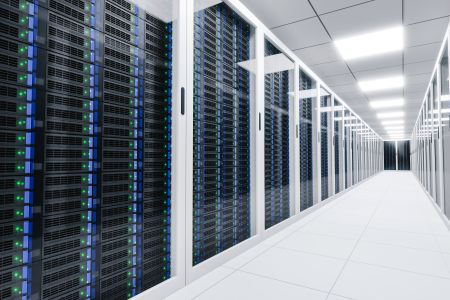
The decision most data center managers face today is not whether to support AI workloads. It is how quickly they can build the infrastructure to support them without overspending on hardware that does not fit their actual workload mix.
AI applications are not uniform. A government agency running large language model inference has fundamentally different hardware requirements than a university research team running molecular simulations or a financial firm running real-time anomaly detection. Getting the hardware right requires understanding what each workload actually demands, and where the bottlenecks appear when the hardware is wrong.
Ace Computers builds custom HPC servers and workstations for AI, virtualization, and automation, tailored to the specific workload rather than a one-size-fits-all configuration. Below are the four AI applications driving the most significant infrastructure investment in data centers right now, along with what each one actually requires to perform.
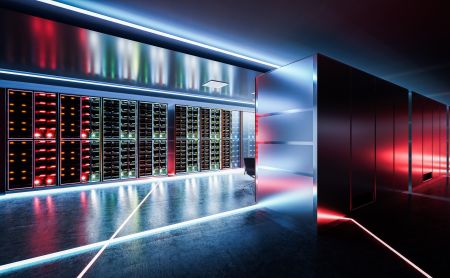
AI workloads place demands on hardware that standard enterprise configurations cannot meet. Before evaluating specific applications, it helps to understand what separates AI-ready infrastructure from conventional data center hardware.
CPU and GPU Balance | Memory Bandwidth | Storage Throughput | Cooling Requirements |
Multi-GPU configurations with high parallel throughput for training and inference workloads | Large memory pools (512GB to 2TB+) with fast interconnects to prevent data starvation during model runs | NVMe SSDs for ultra-low-latency data access; datasets must move as fast as the GPU can consume them | High-density racks drawing 20 to 40 kW or more require direct liquid cooling to sustain continuous AI workloads |
CPU-dense architecture with strong multi-thread performance for orchestration and preprocessing tasks | PCIe Gen 5 and NVLink to maintain bandwidth across distributed training clusters | High-capacity storage arrays (petabyte-scale) for dataset management and checkpoint storage | Precision airflow design to supplement liquid cooling in mixed-workload environments |
Federal agencies and defense organizations procuring AI-ready hardware should note that Ace Computers solutions are available through multiple contract vehicles. Review available procurement options through GSA, NASA SEWP V, ITES-4H, ADMC 3, and 2GIT.
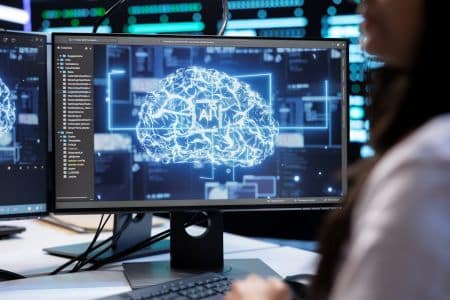
AI model training is the most compute-intensive workload in modern data centers. Training a large language model or a vision model from scratch requires sustained parallel processing across hundreds or thousands of GPU cores, high-bandwidth memory that can keep pace with the compute, and extremely fast storage to feed datasets without starving the GPU during training cycles.
The consequences of undersized hardware show up in training time. A configuration bottlenecked by memory bandwidth or storage throughput can turn a 12-hour training run into a 40-hour one. For organizations running iterative training cycles, that difference compounds quickly into lost time and missed deployment windows.
Modern training environments also need to support distributed computing across multiple nodes. That means NVLink for GPU-to-GPU communication, PCIe Gen 5 pipelines to move data between components, and high-efficiency power delivery to sustain continuous workloads without thermal throttling.
Common AI Model Training Use Cases
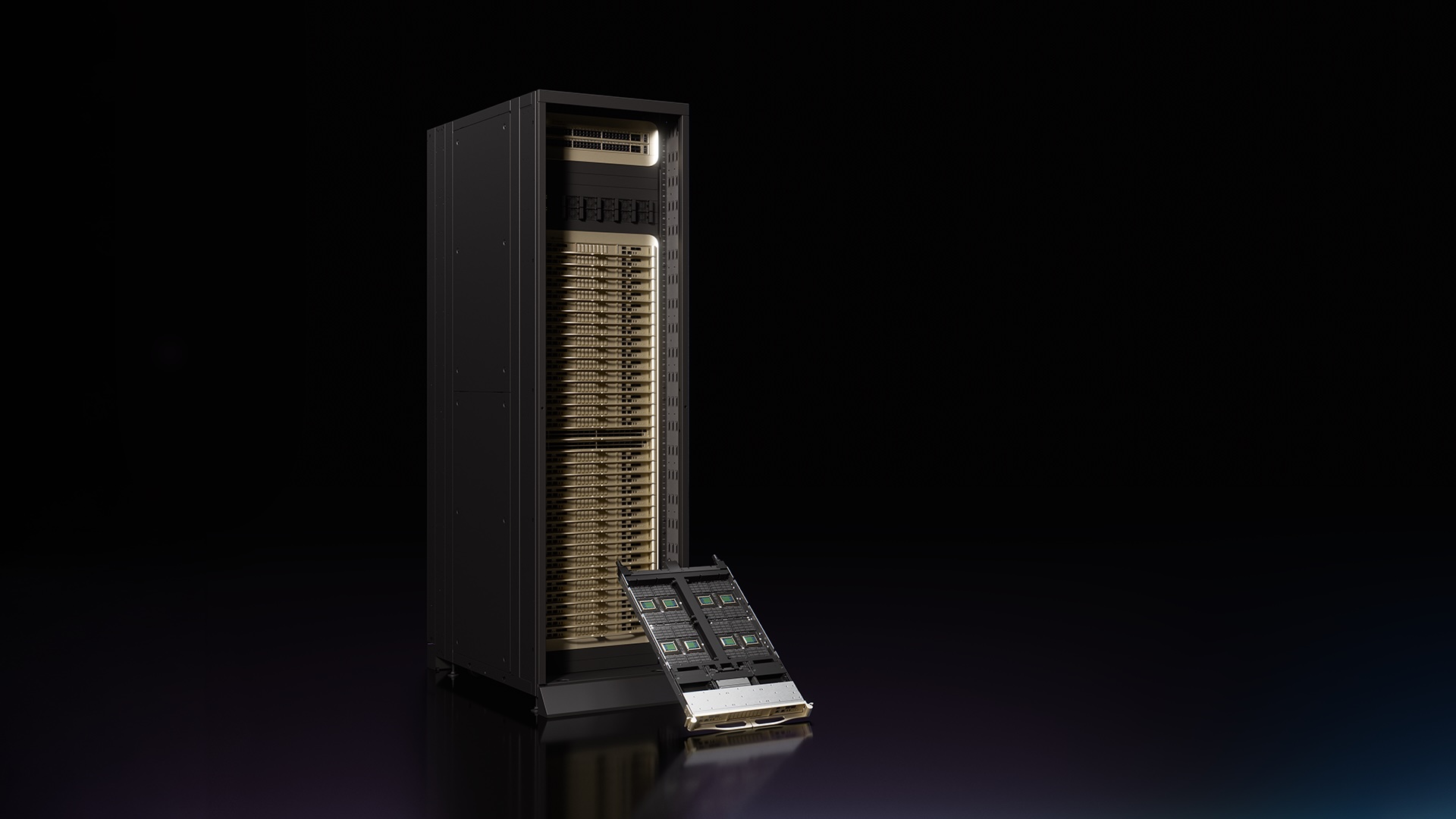
Recommended System: Matrix Scalable AI Server
Agentic AI systems link multiple models, tools, and data sources to complete tasks with minimal human intervention. Unlike a single model answering a query, an agentic system orchestrates a chain of actions, retrieves information from vector databases, calls external tools, and synthesizes outputs across multiple models running simultaneously.
The hardware challenge with agentic AI is latency. These systems must respond in near-real time across complex multi-step workflows. That requires low-latency inference GPUs, high-speed memory access, and scalable architecture that can handle parallel orchestration without degrading response time as the agent ecosystem grows.
As organizations expand into multi-agent deployments, the infrastructure must also handle cross-workflow dependencies reliably. A single underperforming node in an agentic pipeline can introduce delays that cascade through the entire system.
Common Agentic AI Use Cases
Recommended System: Powerworks Matrix B300 Server
Machine learning and predictive analysis workloads are among the most broadly deployed AI applications across industries. Unlike model training, which runs in discrete cycles, ML inference and predictive systems often run continuously, processing incoming data streams and returning outputs in real time.
These workloads rely on high CPU performance, moderate GPU acceleration, and consistent memory bandwidth rather than the peak GPU density required for training. The emphasis is on reliability and throughput over raw compute power. Systems that are slightly slower but far more stable tend to outperform high-peak configurations that introduce thermal or memory variability over time.
For government and defense organizations, predictive analysis applications often run on classified or sensitive datasets, which means hardware selection must also account for supply chain security and compliance requirements alongside performance. Ace Computers builds systems that meet those requirements through Federal and Military procurement channels.
Common Machine Learning and Predictive Analysis Use Cases
Recommended System: Matrix Scalable AI Server
Computational science workloads include CFD modeling, structural analysis, molecular dynamics simulations, and GPU-accelerated rendering. These applications have driven HPC infrastructure investment for decades, and the addition of AI-accelerated solvers has significantly increased the hardware requirements for organizations that need to run both traditional simulation and AI-enhanced workflows on the same infrastructure.
The defining hardware requirement for computational science is floating-point performance, measured in FLOPS. These workloads push GPU compute to its limits and benefit from large-memory configurations, low-latency storage for checkpoint management, and optimized GPU drivers that reduce solve times and improve visualization performance.
Research institutions at Georgia Tech and Purdue rely on Ace Computers systems for exactly these workloads, running HPC clusters that support both traditional simulation pipelines and emerging AI-accelerated research applications. For higher education and research institutions evaluating procurement options, Ace Computers systems are available through federal and state contract vehicles.
Common Computational Science Use Cases
Recommended System: Matrix HGX H200 Artificial Intelligence Server
Ace Computers brings over 40 years of HPC and AI hardware expertise. The company takes a hardware-agnostic approach, meaning configurations are engineered around each organization’s specific workload rather than around a preferred vendor’s product roadmap. That distinction matters when the workload does not fit a standard form factor.
What Sets Ace Apart
Federal, state, and local government agencies can procure Ace Computers solutions through established contract vehicles. Explore options through GSA, NASA SEWP V, ITES-4H, ADMC 3, and 2GIT. State and local agencies can procure through NASPO, NCPA, and VSA contract vehicles.
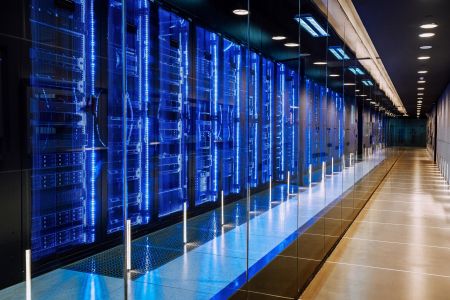
The four AI applications covered here, model training, agentic AI, machine learning and predictive analysis, and computational science, each have distinct infrastructure requirements. Building data center infrastructure that performs reliably across all of them requires hardware that is configured for the workload, not selected from a catalog.
Organizations that get this right early gain a meaningful advantage in deployment speed, operational cost, and the ability to scale as workloads evolve. Those that underbuild spend the difference later in performance penalties and infrastructure rework.
Ace Computers has been engineering these configurations for over four decades. The team is ready to help scope, integrate, and optimize AI-ready infrastructure for your specific environment.