
Scientific research and high-performance computing share a hardware problem that most workstation vendors do not fully understand. The workloads are not uniform. A computational fluid dynamics simulation has different hardware requirements than a molecular dynamics run. A machine learning pipeline for genomic analysis places different demands on memory and GPU architecture than a climate modeling workflow. And all of them need to run reliably, at full throughput, for extended periods without thermal degradation or memory errors introducing results that cannot be trusted.
General-purpose workstations are not built for this operating reality. They are built for productivity, with occasional peaks in compute demand. Scientific and HPC workstations are built for sustained operation at or near peak demand, with hardware configurations that match the specific workload rather than the closest available standard configuration.
Ace Computers has been building custom HPC workstations for scientific research institutions, federal agencies, and enterprise technical teams for more than 40 years. This guide covers what those workloads actually require, how to evaluate hardware against those requirements, and how research institutions and government agencies can procure mission-ready systems through established contract vehicles.

The term high-performance computing is used loosely in hardware marketing, but for scientific research environments it has a specific meaning. An HPC-ready workstation for research delivers sustained computational throughput at the precision level the workload requires, without performance degradation over extended run times, and with the memory architecture to handle the dataset sizes that modern research demands.
Three hardware characteristics determine whether a workstation actually meets that standard:
Processing Architecture
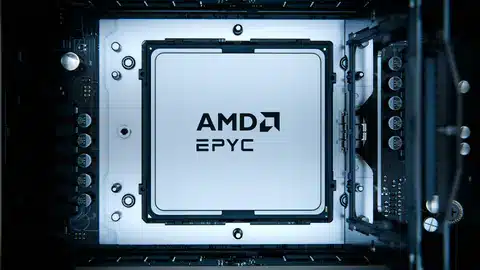
Scientific research workloads benefit from high core counts and strong memory bandwidth rather than peak single-thread clock speed. Workflows like CFD simulation, molecular dynamics, and large-scale data analysis are highly parallel and benefit from processors with many cores that can execute independent computations simultaneously. AMD EPYC processors, with their high core counts and large memory capacity per socket, have become the architecture of choice for many HPC research workloads precisely because they are designed around memory bandwidth and parallel throughput rather than single-core speed.
GPU Compute
GPU acceleration has transformed scientific research computing over the past decade. Workloads that once required clusters of CPU nodes can now run on a single well-configured workstation with high-end GPUs. For research applications, GPU selection is driven by VRAM capacity, which determines the maximum problem size that can be held in GPU memory, floating-point precision capability, particularly FP64 for double-precision scientific computation, and memory bandwidth, which determines how fast data can move between the GPU and the system memory.
Ace Computers builds workstations around NVIDIA RTX Pro 6000 Blackwell GPUs for research applications requiring a combination of visualization, AI acceleration, and FP64 scientific compute in a single platform.
Memory Configuration and Reliability
Scientific research workstations require ECC (Error-Correcting Code) memory that detects and corrects data corruption in real time. A single uncorrected memory error in a long-running molecular dynamics simulation can invalidate hours of computation without producing an obvious error message. ECC memory is not a premium option for research workstations. It is a baseline requirement.
Beyond ECC, large memory configurations allow researchers to hold more of their dataset in system memory rather than moving data between memory and storage repeatedly during computation. For genomics, climate modeling, and material science simulations, system memory of 256GB or more is often a practical requirement rather than an overspecification.
Computational Fluid Dynamics and Structural Analysis
CFD and structural analysis workloads are among the most computationally demanding in engineering and scientific research. These simulations model physical phenomena at high resolution across complex geometries, requiring both high core count processing for the solver and sufficient memory bandwidth to feed the compute without bottlenecks.
For CFD and structural analysis, Ace Computers recommends dual-socket configurations with AMD EPYC processors and high-memory configurations starting at 256GB ECC DDR5. The Matrix Scalable AI Server provides a platform that handles both the computational demands of the simulation and the visualization requirements for reviewing results.
Molecular Dynamics and Drug Discovery
Molecular dynamics simulations model the physical movement of atoms and molecules over time, requiring sustained FP64 compute and large memory configurations to hold the simulation state. Drug discovery workflows add AI-accelerated inference layers that benefit from high-VRAM GPU configurations.
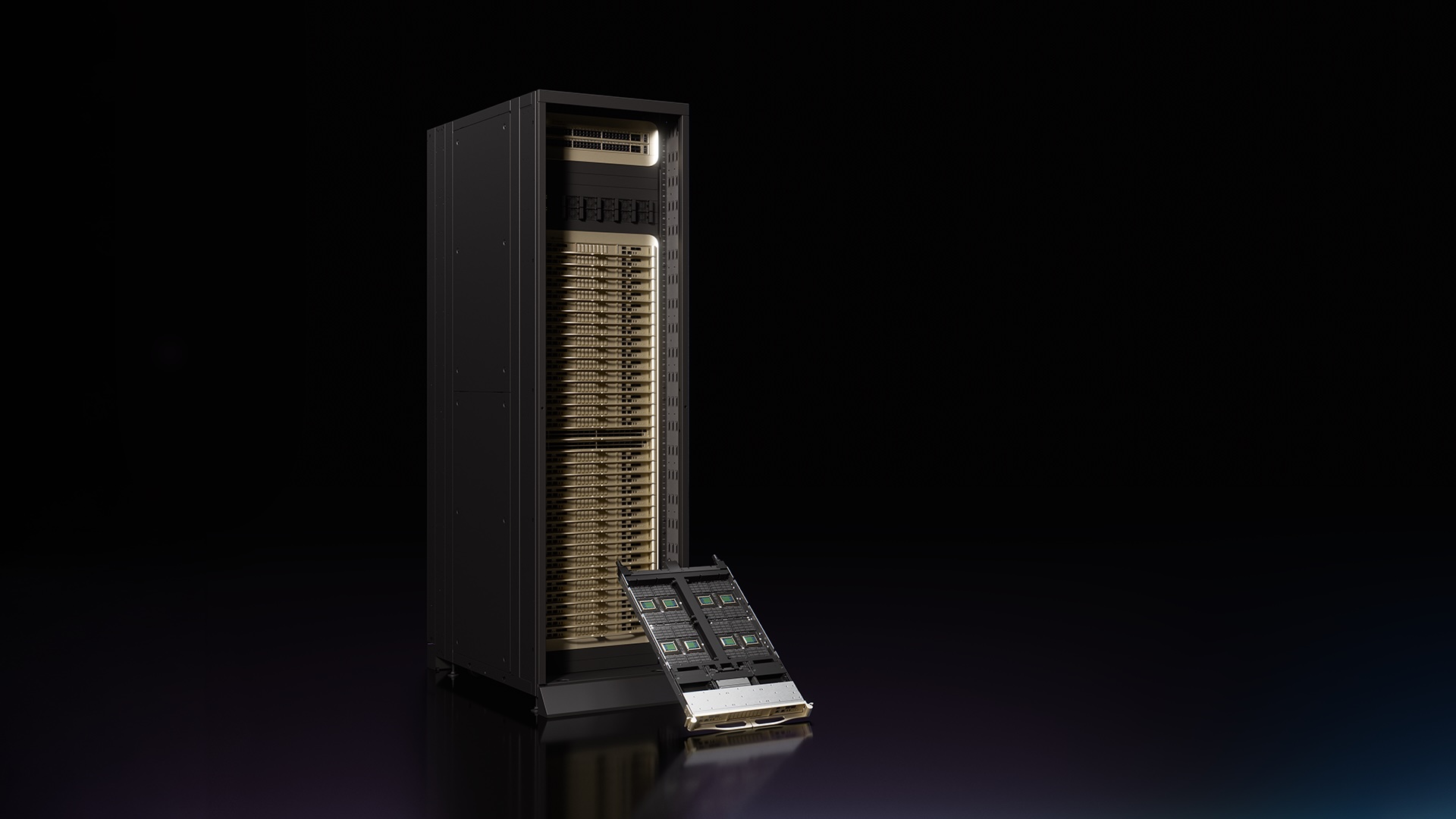
For molecular dynamics and drug discovery, Ace recommends high-density GPU platforms that combine FP64 capability with large VRAM pools. The Powerworks Matrix HGX H200 Server delivers the GPU compute density and memory bandwidth that molecular dynamics at scale requires.
Machine Learning for Scientific Research
Research teams applying machine learning to genomics, climate data, and material science need workstations that handle both the training and inference phases of the ML pipeline. Training requires sustained GPU throughput and large memory. Inference requires fast response at the precision level the model was trained at.
For scientific ML workloads, Ace recommends multi-GPU platforms with configurations validated for the specific model architecture and dataset size. The engineering team works with each research institution to confirm the right GPU count, VRAM allocation, and interconnect configuration before the system ships.
Scientific Visualization
Visualizing the output of large-scale simulations requires GPU configurations optimized for rendering complex 3D datasets at research-grade fidelity. This workload runs alongside computation rather than sequentially, which means the workstation needs enough GPU capacity to handle both simultaneously.
NVIDIA RTX Pro 6000 Blackwell GPUs support both the compute and visualization requirements of modern research workflows, which is why Ace uses them as the foundation for research-focused workstation configurations across multiple use cases.
Research institutions and federal agencies procuring HPC workstations increasingly need to satisfy sustainability requirements alongside performance specifications. Ace Computers holds EPEAT Gold certification across desktops, laptops, and workstations, and our systems are ENERGY STAR certified to Version 8.0 requirements.
EPEAT Gold reflects a full product lifecycle evaluation: material and manufacturing standards, energy efficiency during operation, and end-of-life recyclability. For federal agencies subject to Executive Order requirements for sustainable electronics procurement, Ace’s EPEAT Gold and ENERGY STAR certifications meet the mandatory acquisition requirements under FAR Subpart 23.
For research institutions with sustainability commitments, EPEAT Climate+ builds on EPEAT Gold with deeper requirements for greenhouse gas emissions reduction and supply chain transparency. Ace is an active contributor to the evolution of EPEAT standards and designs systems with forward compatibility for emerging sustainability requirements.
Federal agencies, national laboratories, and research universities procuring HPC workstations can access Ace Computers systems through established contract vehicles that have completed compliance vetting including TAA compliance verification:
State and local government agencies and higher education institutions can procure through NASPO, NCPA, and VSA contract vehicles. Ace Computers’ engineering team is available to discuss configuration requirements, sustainability documentation, and delivery timelines for your specific research program or procurement.
HPC workstations are configured for sustained operation at peak compute demand, with ECC memory, high core count processors, and GPU architectures optimized for parallel scientific workloads. Standard workstations are configured for productivity with occasional compute peaks. The distinction matters for scientific research because standard workstations may deliver adequate benchmark performance but degrade under the extended, high-throughput operation that research workflows require.
Yes. Ace Computers holds EPEAT Gold certification and ENERGY STAR Version 8.0 certification across our workstation and desktop product lines. Documentation is available on request for procurement officers with mandatory sustainable electronics acquisition requirements under FAR Subpart 23.
Yes. Our engineering team works directly with research institutions to evaluate specific workload requirements including model size, precision requirements, memory needs, and scalability horizon before recommending a configuration. There is no catalog-only approach. Every system we build is validated for the workload it will support.