Home/Blog/Data Center Networking: Traditional vs Spine-Leaf Architecture
Data Center Networking: Traditional vs Spine-Leaf Architecture
Last Modified: June 29, 2026
Why Data Center Networking is More Important Than Ever
Modern data centers are no longer defined by how much compute they can contain, but by how efficiently that compute can communicate. With AI and virtualization continuing to grow, the network has become the backbone of performance. Data center networking determines how fast information moves, system reliability, and how well the infrastructure can scale.
Ace Computers designs HPC and AI servers built for modern data center networking, helping agencies have the throughput, bandwidth, and reliability required to support next-generation workloads.
For federal agencies and defense organizations building or upgrading data center infrastructure, network architecture decisions carry an additional layer of consideration: every component in a spine-leaf deployment, from switches to interconnects to the servers themselves, may be subject to TAA compliance requirements. Agencies evaluating a transition to spine-leaf architecture should factor compliance documentation into vendor selection from the start rather than discovering gaps after procurement.
Data center networking (DCN) connects servers, storage, switches, routers, and virtual resources into a unified environment. Data center networking enables large-scale workloads, virtualization, and distributed applications by providing and ensuring reliable communication between every component within the data center.
The two biggest traffic patterns:
North-south traffic: data flowing between the data center and external users
East-west traffic: data moving internally between servers, storage nodes, and applications
In 2026, east-west traffic continues to influence DCN architecture by defining communication requirements. AI clusters and distributed databases both require constant server-to-server communication to run efficiently. Organizations are now rethinking their network architecture and are moving on from legacy systems to spine-leaf architecture.
Federal agencies and government organizations building or upgrading data center infrastructure can procure Ace Computers HPC servers through established contract vehicles. See available procurement options for federal agencies.
Data Center Networking Benefits
Data centers with a high-level network typically are built on principles of low latency, reinforcing the importance of choosing the right data center architecture.
Key advantages of a well-designed DCN
High availability through redundant paths & fault-tolerant switching
Low latency
East-to-west traffic flow
Scalability & Security
Automation
Well-designed data center networks allow organizations to support large workloads, reduce downtime, and maintain predictable performance as infrastructure expands.
Traditional vs Spine-Leaf Architecture
Traditional 3-Tier Architecture:
Traditional data centers consist of three layers: access layer, distribution layer, and core layer. This architecture used to be used widely and fully supports north-south traffic, but as workloads have advanced, scaling for east-west traffic has become more critical. Spanning Tree Protocol (STP) is often used in traditional architecture to block redundant links to prevent loops, but it results in reduced bandwidth and unpredictable latency.
Spine-Leaf Architecture:
Spine-leaf has become the new standard for AI-ready and HPC-ready data centers. It is used by hyperscalers like Google and Meta and supports mass east-west traffic with consistent, predictable latency. Every leaf switch connects directly to every spine switch, eliminating the bottlenecks that traditional three-tier designs create under heavy AI and distributed compute workloads.
Networking Checklist: What do Modern Data Centers Need?
To make sure your network is built to support AI, HPC, and large-scale virtualizations, we have provided a checklist that organizations should use to evaluate their networking environments.
Will your network support?
High-speed switching (100/200/400GbE or InfiniBand)
Balanced CPU/GPU architecture
High memory bandwidth
NVMe storage for low-latency data access
Fiber-first cabling
Redundancy across power, switching, and network paths
Procuring Data Center Infrastructure for Government and Federal Agencies
Federal agencies, defense organizations, and government contractors evaluating data center networking upgrades can procure Ace Computers HPC servers and infrastructure through multiple established contract vehicles. Ace Computers is available through the following federal procurement channels:
How Ace Computers Supports Data Center Networking:
Ace Computers engineers HPC and AI systems that can fit seamlessly into modern spine-leaf architecture, reinforcing scalability without sacrificing bottlenecks. Our engineering team focuses on balanced CPU/GPU performance, high-bandwidth memory, and an NVMe-first storage pipeline approach to match today’s networking throughput.
For over 40 years, Ace Computers has delivered hardware‑agnostic integration, modular configurations, and full lifecycle support, helping organizations modernize their data center networking with confidence.
Security Driven Environments
Nomad Dual Xeon 5th Gen Ruggedized Server
Security‑driven environments require stable, CPU‑dense systems capable of handling encryption, inspection, and virtualization without compromising uptime. Our Nomad Dual Xeon 5th Gen Ruggedized Server delivers hardened performance for secure facilities and edge deployments.
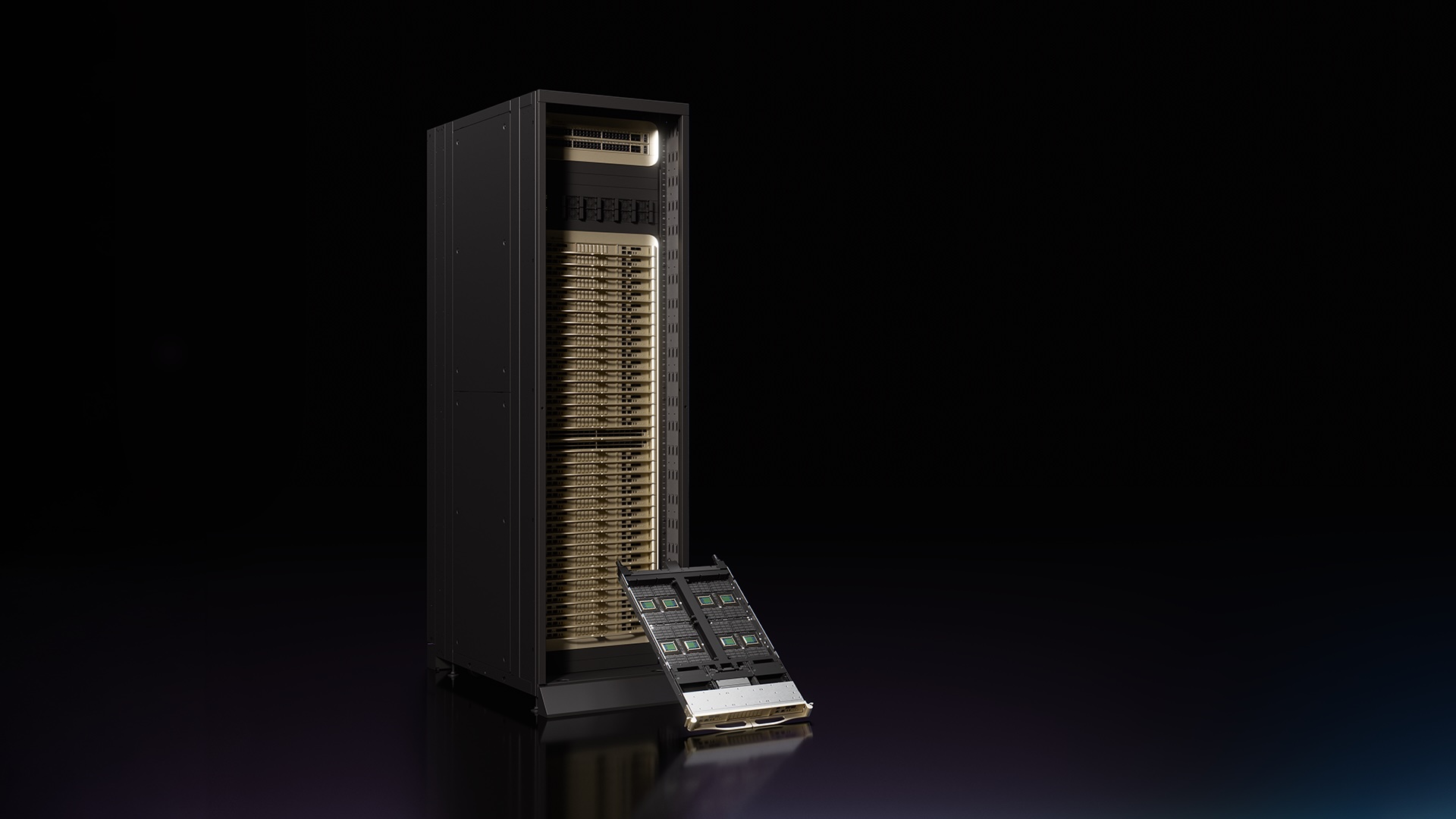
East-west traffic is the core of modern AI clusters and HPC workloads and requires massive bandwidth and predictable low-latency communication. Our Matrix 8U HGX B200 AI Server is designed specifically for these high-density, high-throughput environments.
How it supports:
Extreme GPU bandwidth (8 x NVIDIA HGX B200 GPUs with NVLink)
SDN requires flexible, high-core-count systems capable of running orchestration layers, virtual switching, and automated policy engines. Our Matrix Scalable AI Server provides the balanced foundation that SDN environments depend on.
Data center networking is undergoing a major transformation as AI influences the technological landscape; the network has become the foundation for performance. Ace Computers delivers the compute, memory, storage, and networking-ready system to power the next generation of data centers. Our systems are versatile by providing security, traffic flow optimization, or enabling DN-driven automation. Ace provides the hardware organizations need to scale with confidence.
Spine-leaf architecture is only as effective as the servers and compute infrastructure connected to it. Ace Computers designs HPC and AI servers built to perform in modern spine-leaf environments, with the throughput and bandwidth that AI clusters, distributed databases, and east-west traffic patterns demand. For federal agencies, our systems are available with full TAA compliance documentation through established contract vehicles.
If you’re ready to modernize your data center networking strategy, our team is here to help. If you have any questions or would like to speak to an expert, please do not hesitate to contact us today.