

Since retiring in October of 2025 and taking a position with Ace Forensics as a Digital Forensic and Artificial Intelligence Solutions Engineer, I have been battling an issue I didn’t anticipate I would be fighting. After 31 years in law enforcement, I knew dealing with agencies budgets, or lack there-of, was going to be an issue but not the issue at hand.
I travel around the country attending various Digital Forensics shows and I continually hear the same thing, time after time. Agencies are being forced to buy a computer off their agencies’ established computer procurement list and are not allowed to purchase purpose-built digital forensics system from a digital forensics company like Ace Forensics or others. There are others, they just are not as good as Ace. But their agencies are forcing them to procure computers from established purchasing lists from vendors like Dell, Lenovo, HP.
In my quest to learn more about how and why this is happening, and how to avoid it, I have learned a few things I can share.


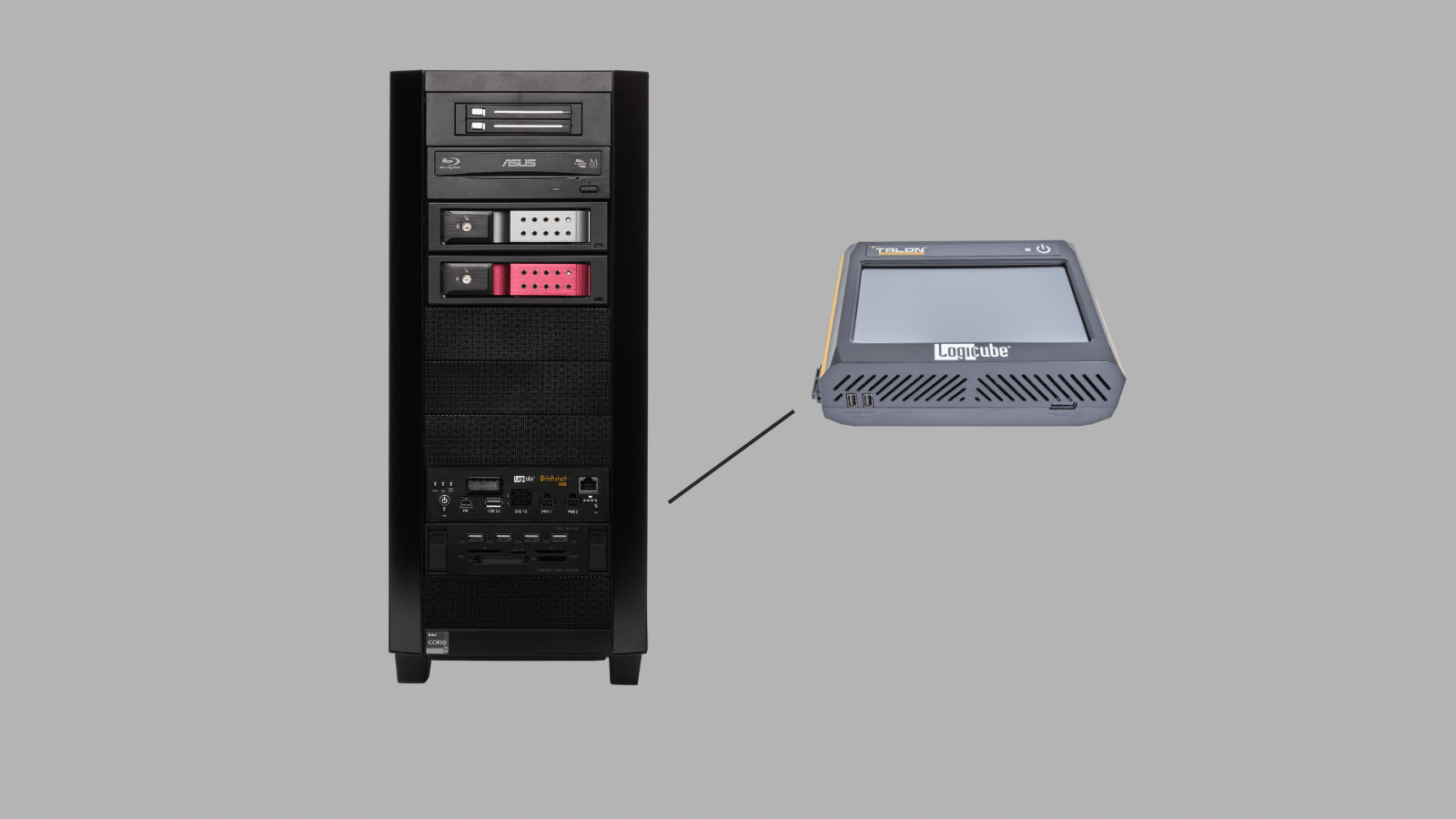
First, Investigators are not specifying, or spec’ing, out what they need in their forensic system. This subverts the process at the onset. Digital Forensics computer systems cannot simply be bought – they are built! This is an important fact to keep in mind. A digital forensics computer is a very high-end system, like a high-end gaming computer. The difference is that it has forensic hardware installed to serve the forensic process and related needs. The process starts with what brand you prefer, AMD or Intel – think Chevy and Ford and let the debates begin. In reality, both have their pros and cons. In the end, each will get you from point A to point B, assuming you buy the best you can get.

After deciding what tribe you want to be on, AMD or Intel, the next step is to get the most up-to-date motherboard and chipset you can. The reason for this is simple math. The goal is to build a computer that can do what you need it to do with long lasting capabilities (think 5 years). This is known as the forensic refresh period. These purpose-built machines generate heat faster than standard systems, thus requiring a system replacement within five years. Not to say the computer can’t be used for something else less stressful. The end goal is to (1) get the best you can, (2) that will do the work needed, and (3) last five years. Trust me when I say that a motherboard in the best Dell workstation you can purchase off your procurement list will be in no way comparable to a motherboard created for custom PC builds.

While choosing the right motherboard (MB), keep in mind that we are handling and downloading cell phones that have ever-increasing storage capacity. For instance, Apple offers an iPhone with 2 Terabytes (TB) of storage today. Downloading phones with large capacity takes a very capable MB and CPU that can process the data and leads us to the new component, memory or RAM.

128GB of DDR5 RAM is the minimum requirement for a digital forensics system. If you are below 128GB, ask yourself why you are choosing to handicap your system. A slower machine equals opportunities lost – it will take longer to acquire a device and significantly reduce the number of devices you can acquire in a day, week, and month. I highly recommend that you should be at 256GB, or more.
We have covered MB, CPU and RAM. Next to understand is GPU. The Graphics Processing Unit, or GPU, is doing a lot the work to free up your CPU and provide an overall speed up your acquisitions. The standard today is an RTX5080 or better series GPU. Anything less is merely a cost-saving choice that sacrifices performance.
The last spec to really consider is storage. Today’s modern MB’s have different types of storage options that provide substantial performance options. I’m not going to delve too deep in this article on storage, but there are some things that the digital forensics investigator should know. Think of storage in three ways. A modern digital forensics system will have the operating system and applications on one storage drive and the forensic data on another. This is typically done with two separate SSD storage drives, commonly called M.2 Nvme. You will also need to think about long-term storage of all those cell phone acquisitions. Long-term storage can be approached in two ways: (1) Redundant Array of Independent Disks (RAID) and (2) Network Attached Storage (NAS).
Personally, I prefer NAS to get the storage of files out of my main DF machine and into something else that isn’t generating heat inside my workstation. Remember heat is the slow cooker of your workstation components. RAID means multiple hard drives inside your workstation computer that are likely mirrored for redundancy in the event one dies. A Network Attached Storage will accomplish the same goal, but it is a separate hardware device that you will be sending data to through network cable (CAT6). It too has RAID redundancy features to protect your data.
Another service to consider is the manufacturer’s warranty. How confident a company is about the computer systems they build is represented in their warranties? Ace Forensics has a five-year warranty on all their digital forensics computer systems and is the only one to offer this. We do this because we have confidence that our systems will last to the five-year refresh.
| DIGITAL FORENSICS MACHINE MANDATORY SPECIFICATIONS | |
|---|---|
|
MOTHERBOARD |
AMD X870E or INTEL Z890 |
|
CPU |
AMD Threadripper PRO 9995WX or INTEL Xeon W9-3495X |
|
RAM |
128 GB DDR5 (minimum) |
|
GPU |
RTX-5080 (Minimum) |
|
STORAGE |
Dedicated NVME for Apps, Cache, and file storage (RAID or NAS) |
|
ASSOCIATED |
Power supply, liquid cooling, fans |
| FORENSIC SPECIFIC HARDWARE |
|---|
|
Write blocker |
|
DongleSafe |
|
USB Front Ports |
|
Cooling Tray |
| FORENSIC SPECIFIC HARDWARE |
|---|
|
Write blocker |
|
DongleSafe |
|
USB Front Ports |
|
Cooling Tray |
The U.S. Secret Service (USSS) National Computer Forensics Institute (NCFI) is a dedicated entity in Hoover Alabama that provides all types of computer training that is available to all U.S. law enforcement agencies to apply. They run BCERT, Basic Computer Evidence Recovery Training.
The USSS NCFI spec’d out a system that they wanted for their BCERT courses.
| DIGITAL FORENSICS MACHINE MANDATORY SPECIFICATIONS | |
|---|---|
|
MOTHERBOARD |
AMD X870E |
|
CPU |
AMD |
|
GPU |
RTX-5808ti |
|
RAM |
128GB DDR5 |
|
STORAGE |
2xNvme SSD and 20TB HDD |
Ace Forensics won the three-year contract to provide forensic computers to the U.S. Secret Service National Computer Forensics Institute for their Basic Computer ERT course. Ace is providing up to 150 BCERT computers each year to the NCFI to support investigators from all over the U.S. We market these spec’ systems to Federal, State and local agencies and a growing number to international agencies. This system retails today around $7500. (The reason for the vagueness is that there is a tremendous shortage with RAM, SSD’s and GPU’s recently due to the growth of AI data centers and the shortages have led to unprecedented price doubling and tripling for these components.)
Once you set out the spec’s needed, you have a baseline to compare lesser systems against. As an example, I went to the Dell website and tried to build the best system I could for digital forensics and the results shocked me. The system did have an AMD Threadripper and 128GB of DDR5 RAM, but that is where it ends for us in law enforcement. The GPU was not sufficient and there was no storage, not to mention the lack of any digital forensics’ hardware. The price for the system was over $12k. This alone should tell you all you need to know. Once you add in the storage needed and the digital forensics hardware you are well over $17K. If you purchased this system from Dell, expect to pay $4k more than the Ace Forensics NCFI spec system with only half of the capabilities.
The Ace FORCE series of digital forensics workstations start at $7500, less in some instances, and goes up to $17. Our $17K system is a full digital forensics workstation with all the bells and whistles and can handle all of your digital forensics cases. It includes 256GB or more RAM, RAID or NAS and more. Why spend your valuable agency funds on a more expensive and much less capable system? I am hopeful that armed with this information that you will be able to make a strong case for purchasing your digital forensics computer hardware from a dedicated DF company. Ace Forensics has a dedicated procurement team that handles all the Federal and State contracts that Ace Computers markets to. We can assist you by working with your agency to either bypass the procurement list or be added as an approved company so that you can purchase the needed systems from us. Keep in mind that getting on your agency’s approved procurement lists takes time, so sooner you can contact us ahead of your refresh period the better.
I have learned that procurement lists are only a mechanism to provide government agencies with a quick and efficient way to make purchases with little regard to cost savings in the case of “digital forensics” computer equipment. The RFP (bid process) is complex and often time-consuming and is intended to allow government agencies to get appropriate level equipment at the lowest cost. Ace Forensics excels at this because we typically come in at a lower price than the other digital forensics computer manufacturers. This is a direct result of Ace Computers sales volume and buying power. Ace has many large Federal and State contracts for computers and associated peripherals and can assemble and ship up to 500 computers a day out of its Chicago based 40,000 square foot headquarters location. This equates to buying power that allows us to sell digital forensic computers at a more competitive price, all while offering the only five- year digital forensics warranty. In closing, please let us help you through your procurement process to ensure that you get the best digital forensic equipment your agency can afford. That is my job and I speak languages that can help: cop, I.T. and contracting. Reach out any time.
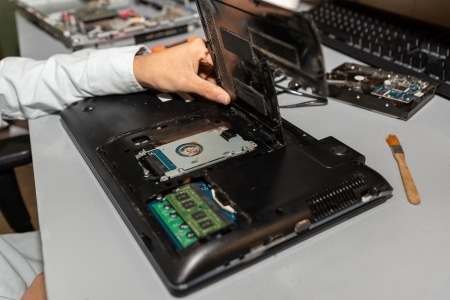
Oh. and by the way, clean out your systems once a month! Those dust bunnies in your workstation are killing your computer!!
Another service to consider is the manufacturer’s warranty. How confident a company is about the computer systems they build is represented in their warranties? Ace Forensics has a five-year warranty on all their digital forensics computer systems and is the only one to offer this. We do this because we have confidence that our systems will last to the five-year refresh.