

Table of Contents
Toggle
Artificial intelligence is the fastest-growing technology of the century, and its environmental footprint is growing just as quickly. AI has been implemented in massive data centers and through intensive training cycles, which can lead to straining power grids, increasing carbon emission levels, and ultimately challenging global sustainability. Organizations are racing to deploy AI to keep up, leaving a significant environmental footprint behind.
The question is no longer, “Will AI impact the environment?”, but “How can AI be responsibly implemented?”
Ace Computers outlines the core principles of AI sustainability, the hardware and infrastructure decisions, and responsible deployment practices. As a trusted OEM for over 40 years, Ace Computers engineers sustainable AI platforms that help organizations reduce emissions, strengthen ESG (Environmental, Social, and Governance) alignment, and modernize responsibly.

AI systems perform operations at a rate that is a thousand times faster than a human neuron. These systems work by enabling smart decision-making that directly reduces emissions and resource consumption. AI helps organizations anticipate issues before they escalate, minimizing their carbon footprint. Deployed responsibly, AI Sustainability becomes a force multiplier, not a detractor. AI sustainability references the designing, deployment, and operation of AI systems in a way that minimizes environmental impact while maximizing efficiency and long-term value.
AI Enables:

With the rapid scale of AI across the globe, it’s imperative to understand environmental challenges before deploying large-scale models. Modern AI systems demand massive electricity, intensive cooling, and frequent hardware refresh cycles, all compounding energy use, water consumption, and e-waste. By staying ahead of global energy and sustainability trends, organizations can make informed decisions and build AI systems that are both powerful and environmentally responsible.
| Environmental Factor | Description | Impact on Sustainability |
|---|---|---|
|
High Energy Consumption |
Large AI models require extensive electricity for training and inference. |
Increase operational emissions and grid demand. |
|
Water Usage |
Cooling GPU clusters consumes significant water resources |
Strains local water supplies and increases cooling costs. |
|
Hardware Waste |
Rapid GPU refresh cycles and scaling create short hardware lifecycles |
Contributes to global e-waste and resource depletion |
|
Carbon Emissions |
Data center operations, cloud workloads, and global data movement generate CO2 |
Raises organizational carbon footprint and ESG reporting requirements |
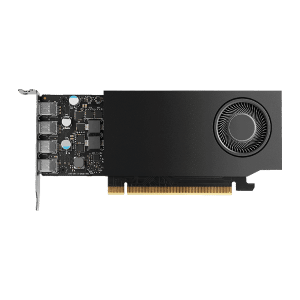


AI Sustainability starts with the hardware foundation. The architecture behind an AI-powered system directly impacts the energy draw, cooling requirements, and long-term environmental impact. Choosing efficient components such as low-power GPUs (RTX A1000, RTX A400, Intel Arc Xe), balanced CPU/GPU ratios (Xeon Silver, Ryzen Pro, Core Ultra), and high-efficiency PSUs drastically reduces operational emissions. AI Solutions with modular, upgradeable designs, are built to extend lifecycles and reduce e-waste. These systems are ideal for EPEAT Climate+ Procurement and cutting-edge performance for years after typical lifecycles end.
Key Principles of Sustainable AI Hardware
Architecture Foundation
| Category | Cloud AI | Secure On-Premise AI |
|---|---|---|
|
Energy Efficiency |
High |
High when optimized with efficient hardware |
|
Water Usage |
Significant for cooling |
Lower, depending on facility design |
|
Emissions Control |
Limited visibility |
Full control over the hardware lifecycle |
|
Data Movement Emissions |
High (Global transfer) |
Low (Localized processing) |
|
Hardware Lifecycle |
Shot (Provider-controlled) |
Long (Customer-controlled) |
|
EPEAT Climate + Alignment |
Varies by provider |
Fully selectable by the customer |
|
ESG Reporting |
Limited transparency |
Full transparency and auditability |
|
Security & Compliance |
Shared responsibility |
Content |
Choosing between cloud and on-premises AI has major sustainability implications. The right approach depends on workload and long-term environmental goals. Cloud platforms operate at massive scale and offer flexible computing, but their extensive cooling demands, water usage, and limited visibility into emissions make it very difficult to measure their environmental impact. Secure on-premises AI offers greater transparency, tighter lifecycle control, and reduced data movement emissions.
While both options are efficient, organizations that prioritize traceability, compliance, and predictable environmental reporting often rely on secure on-premises deployments.

Ace Computers integrates sustainability into every layer of our AI solutions to ensure organizations can deploy powerful workloads without compromising environmental responsibility. Our teams of engineers will evaluate every component to ensure each system delivers maximum performance with minimal energy draw. Ace Computers is a proud recipient of EPEAT Climate +, and we prioritize EPEAT Climate+ aligned components in our systems to reduce emissions, extend hardware lifespan, and support long-term sustainability.
Apart from our top-level hardware, Ace Computers is helping organizations shift towards secure on-premises AI environments to allow full lifecycle control, critical for ESG reporting and regulated sectors. Ace delivers systems that balance performance, efficiency, and sustainability, helping our customers meet their organizational and environmental objectives.
Our Sustainability Practices Include:
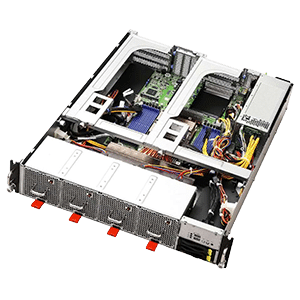
Ace Computers’ Powerworks Matrix Value GPU Server delivers efficient, scalable AI performance while significantly reducing energy consumption and thermal overhead. Our server is ideal for providing sustainability‑driven data centers and space‑constrained deployments.
Key Highlights
Our Powerworks Matrix Value GPU Server is engineered to deliver reliable compute power with a lower environmental footprint than traditional HPC servers.

AI sustainability is now reshaping the networks of global regulations, procurement standards, and ESG reporting requirements. Organizations deploying AI must make sure their systems support transparent emissions tracking, responsible hardware sourcing, and lifecycle accountability. Sustainability requirements are tightening, and AI infrastructure must meet compliance requirements. By staying ahead of the evolving requirements, organizations can remain compliant while focused on future missions.
Key Legislative Areas:

The sustainability landscape is evolving faster than ever, and hardware and infrastructure are at the center of this transformation. Organizations that are aware and adapt to the scaling needs of AI sustainability will position themselves in an excellent spot for the future.
Emerging trends include:
As AI sustainability evolves rapidly, organizations must evolve with it or risk being left behind. Ace Computers, by combining efficient hardware, responsible procurement practices, and secure on-premises architecture, helps customers build AI environments for long-term performance without unnecessary environmental costs. Ace does not just provide solutions, but a foundation for sustainable, scalable, and future-ready AI.
If you have any questions or would like to speak with one of our experts, please don’t hesitate to contact us.