HFT Requirements: Understanding an Evolving Landscape
Today, high-frequency trading is evolving at a rapid pace and reshaping the way traders operate with the advancement of AI. Components of HFT, like machine learning models, predictive analytics, and real-time inference, are becoming increasingly more important, and the hardware behind these systems must keep up with the application requirements. Modern software requires that systems can process millions of market events per second, executing trades in microseconds, and continuously providing stability under latency-sensitive workloads.
Ace Computers has developed high-performance technology solutions to not only acclerate modern applications of financial trading, but to reinforce smooth operation and minimal latency across diverse trading environments. Our solutions use top-level hardware from our pristine partners from AMD, Intel, Kingston, NVIDIA, and many more to ensure that we deliver high core count CPUs, advanced graphic cards, and support for both Linux and Windows distributions.
Our AI workstations are designed for financial trading, AI research, and enterprise workloads. These dual-socket workstations handle everything from real-time data analysis to multi-monitor trading environments, and are not only built for your tasks today, but to scale with your evolving needs.
HFT software is built to analyze market data, identify opportunities, and execute trades at blazing speed. To efficiently run your software applications, having the right HFT hardware is not optional and is required by many software applications as well.
Common software application requirements for HFT hardware include:
Processing real-time market feeds
AI-driven inference models with low latency
Ability to execute trades within microseconds
Continuous stability under high-throughput workloads
Multi-monitor displays
HFT software is directly tied to the hardware capabilities of the system. To ensure that you have the correct hardware for your given application, it is critical to read the guidelines for the application you wish to use. Ace Computers provides solutions that are fit to accelerate common software applications MetaTrader, Thinkorswim, Interactive Brokers, TradeStation, TradingView, NinjaTrader, Backstop, and TrendSpider.
HFT Hardware Core Requirements
HFT software requires that the hardware behind it match all the capabilities necessary to run all the given applications. Each hardware component is required to match a certain set of standards before it can even be considered an applicable option for a given workload.
Follow along with our guide for the key core hardware requirements for HFT:
Feature
Componet Highlights
Ultra Low Latency Architecture
CPUs, memory, storage, and networking are used to minimize latency to execute trades instantaneously.
High-Core, High Frequency CPUs
CPUs like AMD EPYC, Intel Xeon, and Threadripper PRO all provide the per-core performance and throughput necessary for real-time decision making.
Fast Error-Correcting Memory
By using DDR5 ECC memory, systems can validate speed and data integrity, allowing for the ability to process massive market feeds without corruption.
NVMe Storage for Rapid Data Access
Gen 4 NVMe SSDs provide the reading/writing performance required for real-time data, logs, AI models, and back-testing workloads.
GPU Acceleration for AI-Driven Trading
AI’s role is increasing in HFT, and graphics cards like NVIDIA RTX A1000 are built to accelerate inference, pattern detection, anomaly recognition, and predictive analysis to ensure accurate signal generation.
Enterprise-Grade Reliability
ECC memory, redundant power, TAA compliance, and secure firmware are all helpful in validating that your system remains stable during volatile market conditions and exhaustive operation.
Neuron EPYC™ AI Workstation
Ace offers our line of AI-ready workstations, which are designed to meet the rigorous demands of real-time trading, AI-assisted analytics, and sensitive financial workloads. The Neuron EPYC™ AI Workstation is one of our top-performing AI workstations for HFT with an EPYC 9115 CPU for extreme high-core count requirements and NVIDIA RTX A1000 GPU for accelerating simulation capabilities.
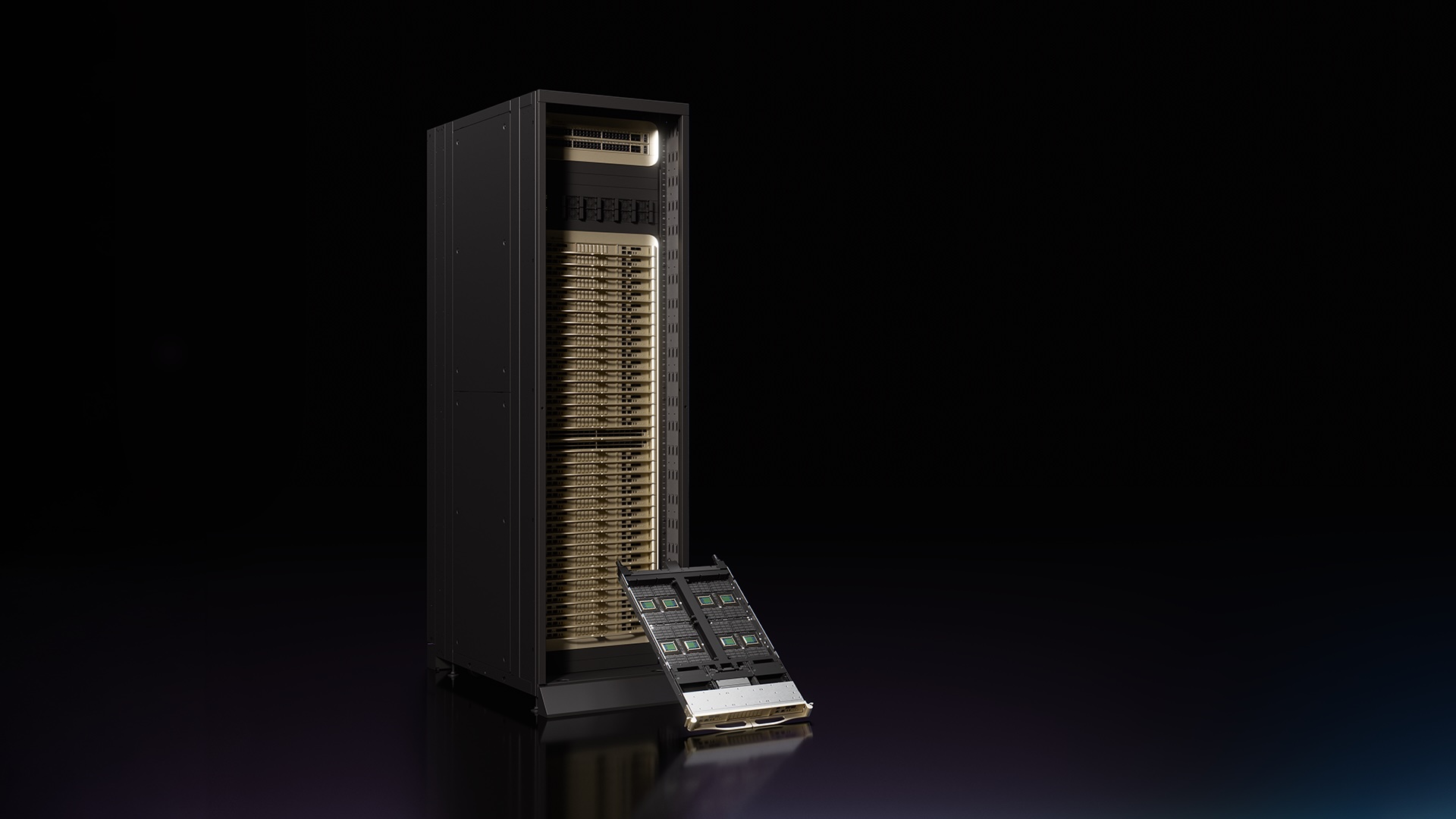
The Matrix Scalable AI Server is a GPU-accelerated compute node built for fast, parallel workloads that support both scientific computing and latency-sensitive applications. The PM2 features dual EPYC 9115 processors for extreme core-count capabilities as well as dual NVIDIA RTX PRO 6000 graphics cards. This server is a masterclass for delivering the high-throughput performance required for real-time analytics, multi-strategy execution, and large-scale simulation environments.
Ace Computers has been a trusted IT provider for over 40 years, and we take pride in our ability to provide top-level hardware from our partners like AMD, Intel, NVIDIA, and many more. Our team has a deep understanding of the industry knowledge required for HFT trading and building, and we can ensure that our HFT hardware is up to trading standards for 2026.
As AI continues to take a bigger role in the market, it’s imperative to keep up with the latest trends in HFT software and federal regulations. As AI is implemented more, latency is becoming increasingly more important when trading with or against AI Agents. AI can also be used to accelerate inference and predictive models and is quickly becoming a necessity in the field of HFT. ECC memory and redundant power remain non-negotiable and are required to protect uptime and will become even more important as AI’s role in HFT gains traction.
High-frequency hardware is critical to determining the overall success of your HFT system and can be the defining factor between profit and losses of millions of dollars. HFT hardware requirements like high-core count CPUs, stable ECC memory, and advanced graphics cards like the NVIDIA RTX series are now making or breaking HFT agencies’ overall success, and understanding what hardware is needed is critical.
Ace Computers offers a wide range of HFT solutions with our Logicad Series workstations, Powerworks Series servers, and Vision Series desktops, as well as customizable configurations upon request. If you have any questions or would like to learn more about procuring the right hardware, please do not hesitate to speak to an expert, please contact us today.