Federal AI infrastructure buyers frequently default to the highest-performance GPU platform available, assuming more interconnect bandwidth is always better. For some workloads, that’s true. For a large share of federal AI use cases, particularly inference and moderate-scale fine-tuning, it’s genuinely unnecessary cost. Understanding the real architectural difference between HGX and standard PCIe GPU servers is the first step to matching infrastructure spend to actual mission requirements.
HGX and standard PCIe are not two competing GPU models. They describe two different ways of connecting GPUs to each other, and that connection method is what determines which workloads each platform can efficiently support.
In a standard PCIe configuration, each GPU communicates with other GPUs by routing data through the CPU. A standard PCIe 5.0 x16 slot delivers roughly 128 GB/s of bandwidth. That’s genuinely sufficient for many workloads, but every GPU-to-GPU data exchange adds latency compared to a direct connection.
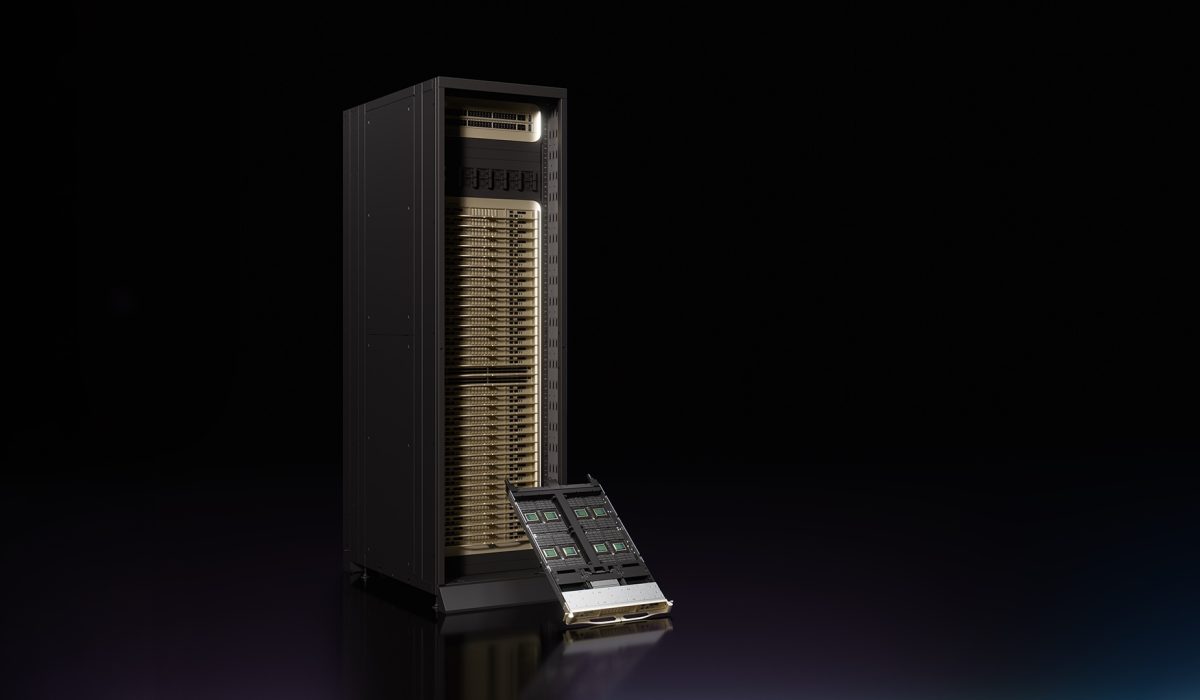
HGX is NVIDIA’s reference platform for mounting multiple GPUs on a shared baseboard, connected directly to each other through NVLink and NVSwitch rather than routing through the CPU. That direct connection delivers approximately 900 GB/s of bandwidth between any two GPUs simultaneously, roughly seven times the bandwidth of a standard PCIe connection. For workloads where GPUs constantly synchronize with each other, that bandwidth difference compounds quickly: a training run that takes seven days on standard PCIe can complete in three to four days on an HGX platform.
The right choice depends almost entirely on how much your workload requires GPUs to communicate with each other during processing, not on raw compute power alone.
Workload | Standard PCIe | HGX / SXM |
Inference (serving trained models) | Well suited; low GPU-to-GPU communication need | Typically unnecessary cost for this workload |
Light fine-tuning, RAG, applied models | Often sufficient | Usually not required |
Multi-GPU model training from scratch | Bottlenecked by CPU-routed communication | Required for practical training timelines |
Large language model training at scale | Not practical beyond small experiments | Standard for this workload class |
Scientific simulation with tightly coupled GPUs | May bottleneck depending on coupling | Recommended when GPUs must synchronize frequently |

Federal AI programs face particular pressure to specify the highest-tier platform available, often driven by a desire to future-proof the investment or a general assumption that more capability is always the safer procurement choice. That instinct is understandable, but it works against the total cost of mission readiness principle that should guide federal hardware specification.
Ace Computers’ workload assessment process is built specifically to answer these questions before a configuration is finalized, rather than defaulting to the highest-tier platform as a safe default. Our federal engineering team evaluates the actual communication and synchronization requirements of your workload and recommends the tier, standard PCIe, HGX, or a mixed approach, that matches genuine mission need rather than assumption.
→ Contact Ace Computers Federal Sales Team
Standard PCIe GPUs communicate with each other by routing data through the CPU, delivering roughly 128 GB/s of bandwidth. HGX platforms connect GPUs directly through NVLink and NVSwitch, delivering approximately 900 GB/s of bandwidth between GPUs, which significantly benefits workloads requiring frequent GPU-to-GPU synchronization.
Generally, no. Inference workloads process largely independently and don’t require the high-bandwidth GPU-to-GPU communication that justifies HGX’s additional cost. Standard PCIe configurations are typically well suited to inference and light fine-tuning workloads.
HGX becomes necessary when a workload requires multiple GPUs to synchronize frequently during processing, most commonly large-scale model training from scratch, where the bandwidth difference can reduce a multi-day training run by more than half.
Yes. Ace Computers’ federal engineering team conducts a workload assessment evaluating your program’s specific compute and communication requirements before recommending a configuration, helping avoid both underspecification and unnecessary overspending.