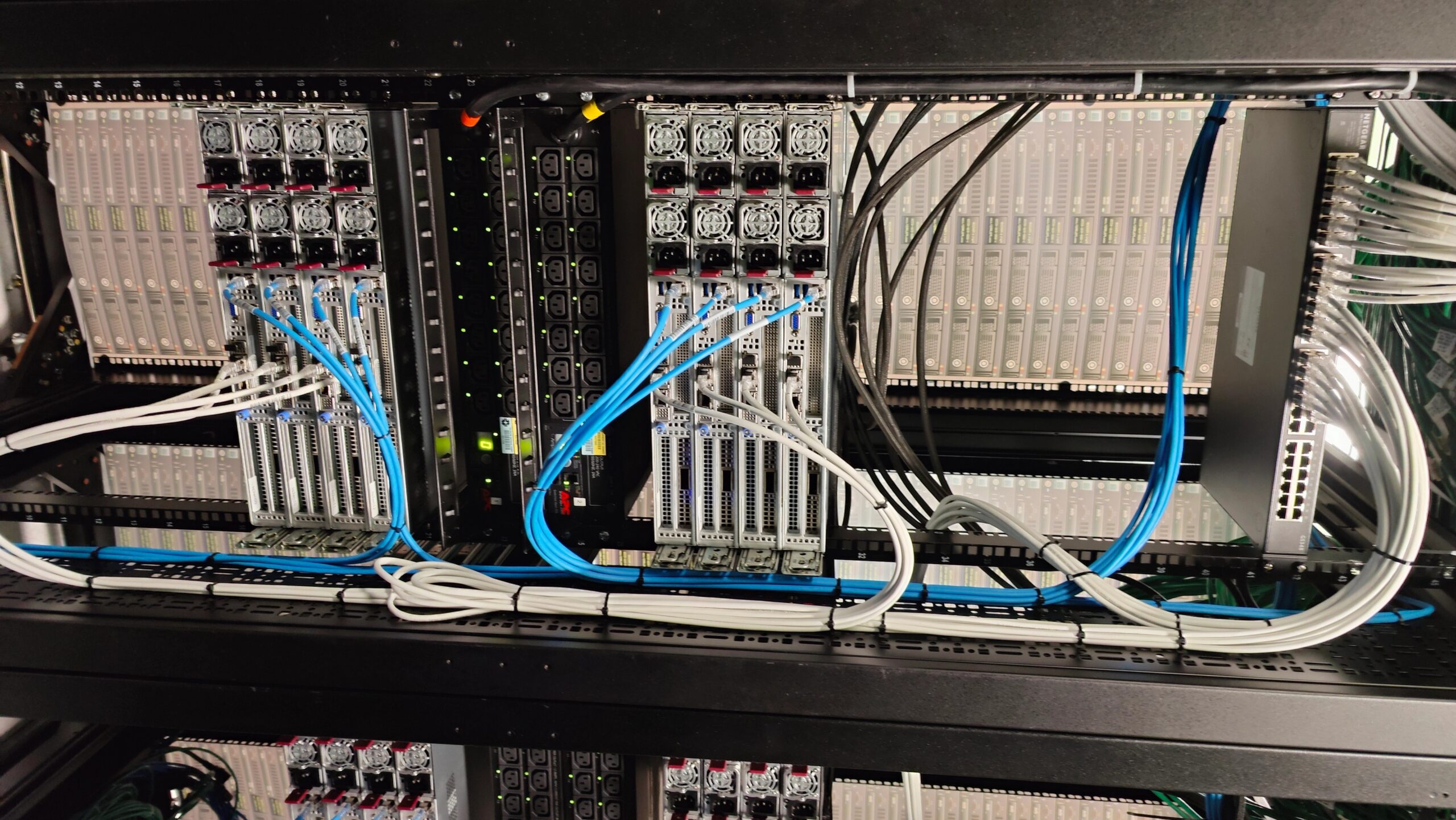

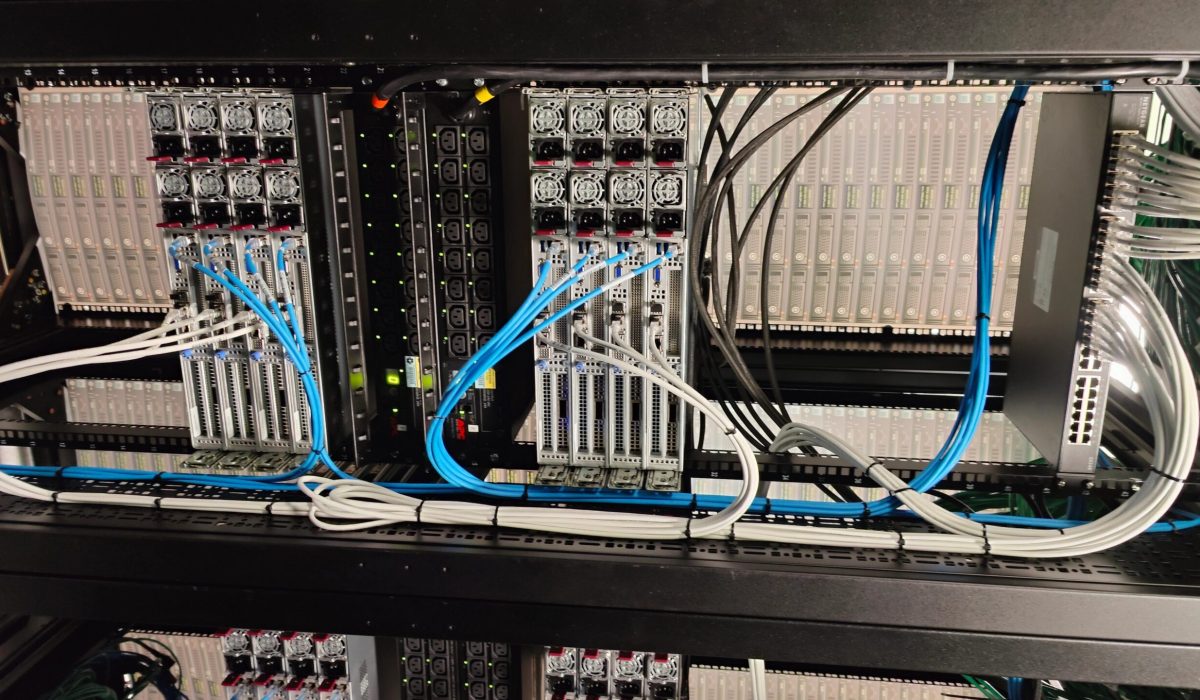
A research computing director has funding approved, a defined set of workloads, and room for about two racks. The requirement works out to somewhere between fifteen and thirty nodes, a mix of CPU and GPU, with a shared storage tier and an interconnect fast enough to run tightly coupled jobs across multiple nodes.
The quotes that come back do not fit. Some are scaled-down versions of reference architectures designed for installations an order of magnitude larger, carrying design assumptions that no longer apply at this size. Others are essentially a list of individual servers, with the work of turning them into a functioning cluster left as an exercise for the buyer.
This is the mid-scale gap, and it is a structural feature of how high performance computing is sold rather than an oversight by any particular vendor.
Large HPC vendors build around volume. A reference architecture is expensive to develop and validate, so the economics favor designs that can be deployed repeatedly at significant scale.
Engineering attention follows the same logic: a deal that represents a few hundred thousand dollars rarely commands the same consultative effort as one representing tens of millions, regardless of how technically interesting the workload is.
At the other end, a system integrator or reseller can quote individual servers accurately, but a cluster is not a collection of servers. It is a collection of servers plus an interconnect fabric, a scheduler, a provisioning system, a shared filesystem, a power and cooling design that accounts for aggregate draw, and a validation process that confirms the whole thing works as one machine before it ships.
Buyers in the middle end up choosing between a design that was optimized for a much larger deployment and a parts list that assumes someone else will handle integration. Neither is a good fit, and the mismatch usually surfaces after the purchase order rather than before it.
In a 500 node cluster, one node represents two tenths of a percent of total capacity. A specification error on that node is a rounding error. In a 20 node cluster, one node is five percent of the entire system. Choosing the wrong GPU, undersizing memory per node, or populating memory channels incorrectly does not cost a fraction of a percent of throughput. It costs a visible share of the capability the institution just paid for.
The practical consequence is that mid-scale procurement cannot rely on averaging out specification errors across a large fleet. Each configuration decision has to be correct on its own terms.
The software and configuration are fine. The gap is at the hardware level, which means it cannot be closed with a configuration change.
At very large scale, interconnect topology is a well-studied design problem with established patterns. At mid-scale, the decision is more binary and more consequential.
A workload that runs tightly coupled MPI jobs across multiple nodes behaves very differently on a low-latency fabric than it does on standard Ethernet, and the difference is not something additional compute can compensate for.
The reverse is also true, and it is the more common and more expensive error. A cluster running embarrassingly parallel jobs, where each node works independently, may not need a high-end fabric at all.
Specifying one anyway consumes budget that would have bought additional nodes or more usable storage. The right answer depends entirely on how the workloads actually communicate, which is a question that has to be asked before the fabric is chosen rather than after.
Parallel filesystems deliver high aggregate throughput, and they also carry real operational overhead: additional metadata and storage servers, a more complex software stack, and administrative expertise that a small research computing team may not have on staff. At sufficient scale, that overhead is clearly justified. At mid-scale, it sometimes is and sometimes is not.
Making this decision well requires understanding the actual I/O pattern of the workloads. A cluster where jobs read a large shared dataset and write modest results has very different storage requirements from one producing large checkpoint files from every node simultaneously. The second case may require a parallel filesystem. The first may be well served by a simpler and more maintainable architecture.
A 500 node installation is a facility design problem, planned with a dedicated data center team from the outset. A single workstation is a wall outlet question. A two rack cluster sits in between, and it is the size where facility assumptions most often go unexamined.
Dense GPU nodes draw significantly more power per rack unit than the general purpose servers that many institutional data centers were built around. The questions that matter are whether the room can deliver the circuits the design requires, whether the cooling system can remove the heat the racks will produce under sustained load rather than at idle, and whether the answer to either question requires facility work with its own budget and timeline. These are answerable in advance. They are considerably more expensive to answer after delivery.
Large installations can tolerate some idle capacity and some scheduling inefficiency because there is enough of the resource that the loss is absorbed. A mid-scale cluster has no such margin.
If the scheduler is configured poorly, if the queue structure does not match how the research groups actually work, or if one group can monopolize the GPU nodes, the effect is immediately visible to everyone using the system.
This makes scheduler configuration and queue policy part of the system design rather than an afterthought handled during the first month of operation.
The most useful shift is to lead with workload characterization rather than node count. A specification that begins with the number of nodes has already made implicit decisions about interconnect, storage, and power that may not match the actual requirement.
A specification that begins with the workloads, how they parallelize, what they read and write, what precision they need, and how many simultaneous users they serve, produces a node count as an output rather than an assumption.
The second shift is to be explicit about where integration labor sits. Someone has to rack the hardware, cable the fabric, configure the scheduler and provisioning system, validate the storage tier, and run the cluster under sustained load before it enters production. If that work is not in the vendor scope, it falls to institutional staff, and it is worth deciding deliberately rather than discovering after delivery.
The third is to define acceptance in advance. A clear statement of what the system must demonstrate before it is considered delivered, sustained load across all nodes, verified interconnect performance, storage throughput at the specified level, protects both parties and surfaces problems while they are still the vendor’s responsibility.
Ace Computers builds custom HPC systems in the range where standardized reference architectures stop fitting and individual server quotes stop being sufficient. That means full rack integration, consultative engineering on configuration before anything is quoted, and systems validated as complete clusters rather than shipped as components.
For over 40 years, Ace has delivered systems to federal agencies, national laboratories, research universities, and technical teams working at exactly this scale. Our engineering team starts with the workload, not the catalog, and builds the system that matches it.

A cluster in the 10 to 40 node range is not a small version of a large system. It is a different design problem with its own constraints, and it rewards careful specification more than larger deployments do, because there is less capacity available to absorb a mistake.
Talk to an Ace Computers engineer about your workloads, your facility constraints, and what you need the system to do. We will tell you what it actually takes to get there.
→ Talk to an Ace Computers engineer about your cluster requirements