Home/Blog/Twelve Questions Worth Asking an HPC Vendor at SC26
Twelve Questions Worth Asking an HPC Vendor at SC26
SC26 runs November 15 to 20 at McCormick Place in Chicago, with the exhibit floor open November 17 to 19.
Most booth conversations default to specifications, which is the one part of the decision a datasheet already answers.
The questions that actually separate vendors are about integration scope, validation, lead time honesty, and what happens when something fails eighteen months in.
Table of Contents
The Problem With Booth Conversations
You have three days, a few hundred exhibitors, and somewhere between five and fifteen minutes per conversation that matters. Most of those minutes get spent on specifications: which GPUs, how much memory, what generation of fabric.
Specifications are the one part of the decision already answered by a datasheet you could have read at your desk. What a datasheet cannot tell you is whether the vendor across the table will hand you a working cluster or a pallet of servers and a phone number.
The twelve questions below are the ones worth spending floor time on. They are not gotchas. A good vendor will have crisp answers to all of them and will probably be relieved someone asked.
Scope: Who Does What
1.What exactly ships, and what is left for my team to do?
Ask for the handoff point in plain terms. Racked and cabled, or boxed? Scheduler configured, or bare OS? Shared filesystem built, or hardware only? The gap between what a buyer assumes and what a vendor quoted is where most post-delivery conflict lives, and it is almost always discovered after the purchase order rather than before it.
2. Who physically installs this, and is that cost in the quote?
If the answer is a third party, ask who, and ask whether that subcontractor has done an installation like yours. If the answer is your own staff, you now have a labor estimate to add to the total.
3. What does the vendor need from my facility, in writing, before shipment?
Circuit types and counts, cooling capacity, floor loading, and the physical path from dock to room. A vendor who has done this before will have a pre-install checklist and will send it unprompted. A vendor who has not will tell you it should be fine.
Validation: How You Know It Works
4. What does burn-in look like, and will I get the results?
Ask for the duration, the load profile, and whether you receive the actual test output rather than a certificate. Sustained load matters more than peak, because a cluster that thermally throttles under a long run is a cluster that delivers less than you specified.
5. What has to be true before I accept delivery?
Get this written into the order. Sustained load across every node, verified interconnect performance at the specified rate, storage throughput at the specified level. Acceptance criteria agreed in advance protect both sides and surface problems while they are still the vendor’s problem.
6. Has this exact configuration been built before?
Not a similar one. This one. If the answer is no, that is not disqualifying, but it changes the risk profile and it should change the validation plan. Ask what they would do differently on a first build.
Timing: What the Lead Time Actually Means
7. What drives the lead time, and which component is the long pole?
A vendor who can name the constraint is tracking it. A vendor who quotes a round number without explanation is estimating. Ask what happens to the schedule if that one component slips.
8. What is the latest date I can still change the configuration?
Requirements move between quote and order, especially on grant-funded work where the award arrives after the specification. Knowing the freeze date tells you how much flexibility you actually have.
9. What is your current actual delivery performance, not your quoted lead time?
These are different numbers. The useful follow-up is simple: of the last ten systems like this, how many shipped on the original date?
The Long Tail: Year Two and Beyond
10. A node fails in month twenty. Walk me through exactly what happens.
Who do you call, what is the response commitment, who supplies the replacement part, and is it the same part or a successor that may behave differently in a mixed cluster? This question gets vague answers more often than any other on the list.
11. If I add eight nodes in two years, what still fits?
Fabric port capacity, rack space, power headroom, and whether the node generation you are buying will still be available or will have been superseded. Expansion planned at purchase is considerably cheaper than expansion improvised later.
12. Who will I actually be talking to after the sale?
The engineer at the booth is often not the engineer who supports the system. Ask whether there is continuity, and if not, what the handoff looks like. For smaller deployments this answer varies enormously between vendors and almost never appears in a proposal.
A Note on Scale
These questions matter more the smaller your deployment is. At several hundred nodes you have a dedicated team, a formal procurement process, and enough scale that vendors assign real engineering attention by default. In the ten to forty node range you often have none of those things, and the same mistakes cost proportionally more because each node is a larger share of total capacity.
That range is also where vendor answers diverge most sharply, which is exactly why the floor is worth using for this rather than for specifications.
Find Us at SC26
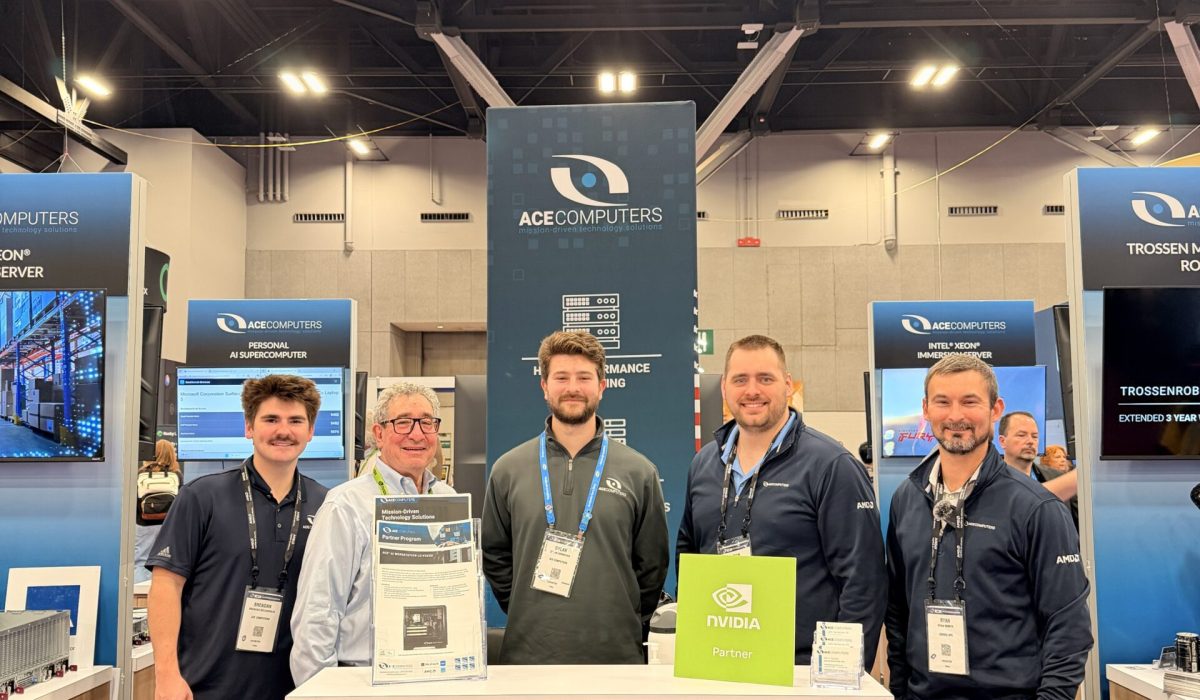
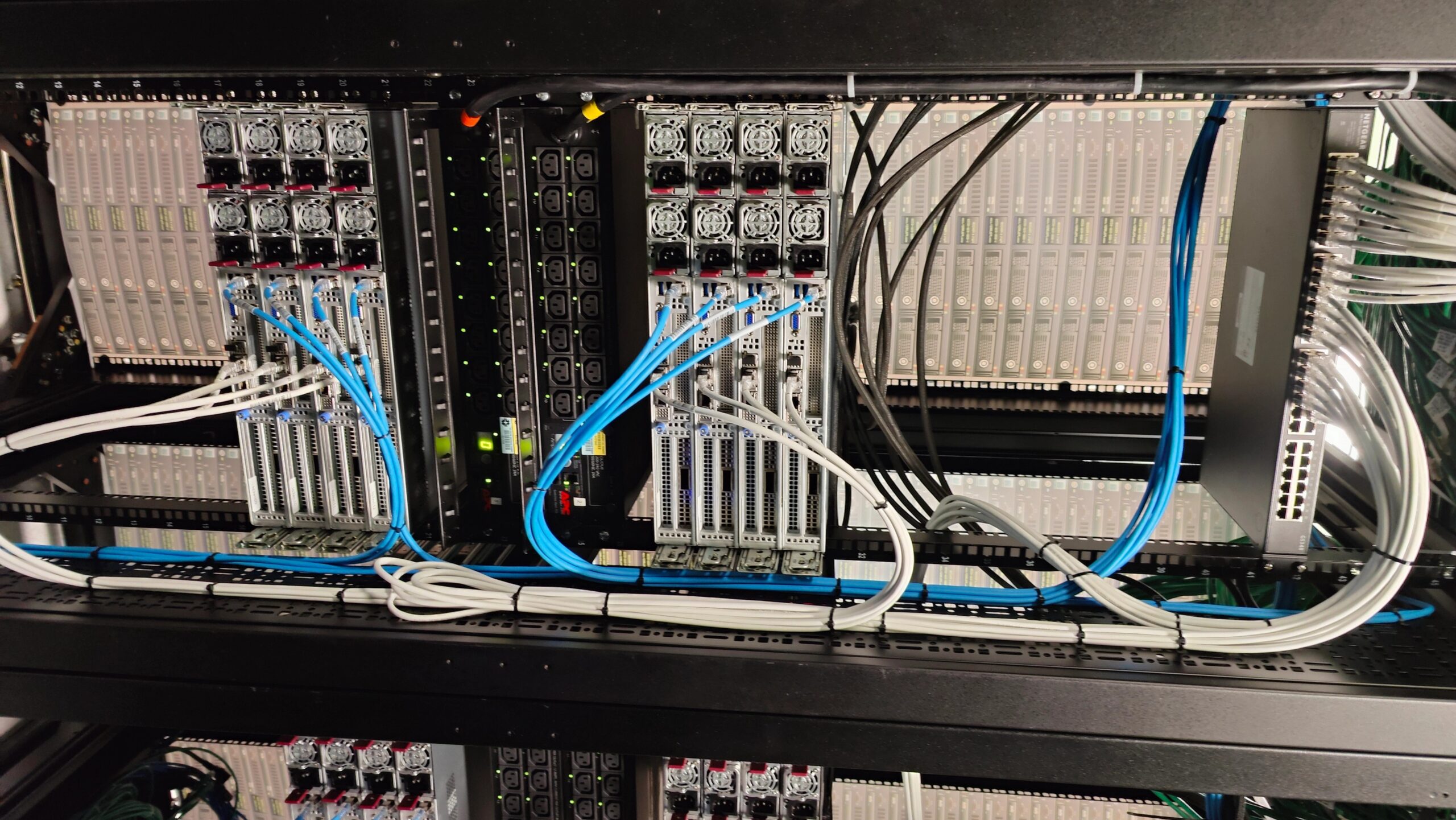
Ace Computers builds custom HPC systems for research institutions, national laboratories, and technical teams, with full rack integration and consultative engineering on every configuration. We have been doing it for over 40 years, and we integrate in Des Plaines, about twenty minutes from McCormick Place.
We are happy to answer all twelve of these at the booth. If you would rather have the conversation with your actual workload in front of us, book time with an engineer before the show and we will come prepared.