Home / Blog / Buying Compute Under a Continuing Resolution: What Still Moves and What Does Not
Female,Cybersecurity,Expert,Standing,With,Her,Back,To,Camera,,Works

Buying Compute Under a Continuing Resolution: What Still Moves and What Does Not

When the federal government operates under a continuing resolution rather than full-year appropriations, the effect on a compute acquisition is rarely a hard stop. It is a narrowing. Some actions stay available, some become difficult, and some become impossible until a full appropriation arrives. Programs that know which is which keep moving. Programs that treat the whole period as a freeze lose months they did not have to lose.

This is a planning problem more than a legal one, and the planning is mostly about sequencing.

Table of Contents

What a continuing resolution typically restricts

Computer workstations display federal and military data and analytics in a control room, with a large United States flag visible in the background.

The specifics vary with each resolution and the exceptions written into it, so the contracting officer is always the authority. As a general shape, though, flat-funding periods tend to limit two things:

  • New starts. A program or activity that was not funded in the prior year generally cannot begin under a continuing resolution, because there is no prior-year funding line to continue.
  • Production or quantity increases. Scaling an existing effort beyond the prior-year rate is usually constrained even when the activity itself is permitted.

For a compute buyer, that distinction is the whole game. Replacing aging nodes inside an existing cluster under an existing program is a different proposition from standing up a new AI environment that has never appeared in a budget line. Both may be technically urgent. Only one of them is likely to be obligatable this quarter.

What usually still moves

Requirements development

Nothing about a flat-funding period stops a program from defining what it needs. Workload characterization, sizing analysis, interface requirements, security and compliance requirements, and acceptance criteria can all be developed while the money question is unresolved. This is the work that normally compresses schedules at the end of an acquisition, and it is free to do early.

Market research

Requests for information, sources sought notices, capability statements, vendor technical exchanges, and benchmark or proof-of-concept discussions are information-gathering, not obligation. A program that uses a flat-funding period to complete market research arrives at the appropriation with a defensible acquisition strategy instead of a blank page.

Acquisition planning and documentation

Acquisition plans, independent government cost estimates, justification documents, security documentation, and the supporting artifacts for an authority to operate all take calendar time that does not depend on obligating funds. Work completed here is work that does not have to happen in the weeks after money becomes available.

Incremental sustainment within the prior-year rate

Replacing failed hardware, buying spares at the established rate, and continuing maintenance on fielded systems generally continue, subject to the specific resolution and how the contracting officer reads it.

The sequencing mistake that costs the most

Computer network server room or data center. 3D illustration

The expensive pattern is waiting. A program pauses everything until the appropriation lands, then has to run requirements definition, market research, solicitation, evaluation, award, and delivery inside whatever remains of the fiscal year.

Compute acquisitions are particularly unforgiving of that compression, because lead times do not shorten to accommodate a late award. Component availability, configuration and integration time, factory test, shipping, site preparation, installation, and acceptance testing all have to fit after award. A program that awards late enough can discover that the hardware cannot physically be delivered and accepted before the funds expire.

The practical rule: use the constrained period for everything that does not require obligating money, so that the only thing waiting on the appropriation is the obligation itself.

A working sequence for a flat-funding period

Phase

Work to complete now

What it buys later

Define

Workload profile, node count and sizing rationale, storage and network requirements, compliance requirements

Removes the longest internal review step from the post-appropriation schedule

Research

RFI or sources sought, vendor technical exchanges, configuration validation against real workloads

Produces a credible cost estimate and a defensible competition approach

Document

Acquisition plan, cost estimate, security and authorization documentation, evaluation criteria

Allows solicitation release within days of funding rather than months

Prepare

Site readiness: power, cooling, floor space, network drops, physical security

Prevents delivered hardware sitting in crates waiting on facility work

Obligate

Solicitation, evaluation, award

The only step that actually needed the appropriation

Talking to vendors during a constrained period

Vendors understand flat funding. The useful conversation is specific rather than speculative.

  • Share the workload, not just the budget uncertainty. A vendor can validate a configuration against a real workload profile without a purchase order in hand.
  • Ask about lead times as a function of award date, so the program can see where the schedule breaks.
  • Ask what the configuration will look like in two quarters, because component generations move during long acquisition cycles and a configuration priced today may not be the configuration available at award.
  • Ask about quote validity and price mechanisms, so the cost estimate reflects something the vendor can actually honor.
  • Ask whether the vendor can hold a configuration baseline across the acquisition, which matters when evaluation takes longer than the component cycle.

Site preparation is the underrated lever

Rows of illuminated server racks in a modern data center with reflective floors and overhead lighting, featured on the v1c Homepage.

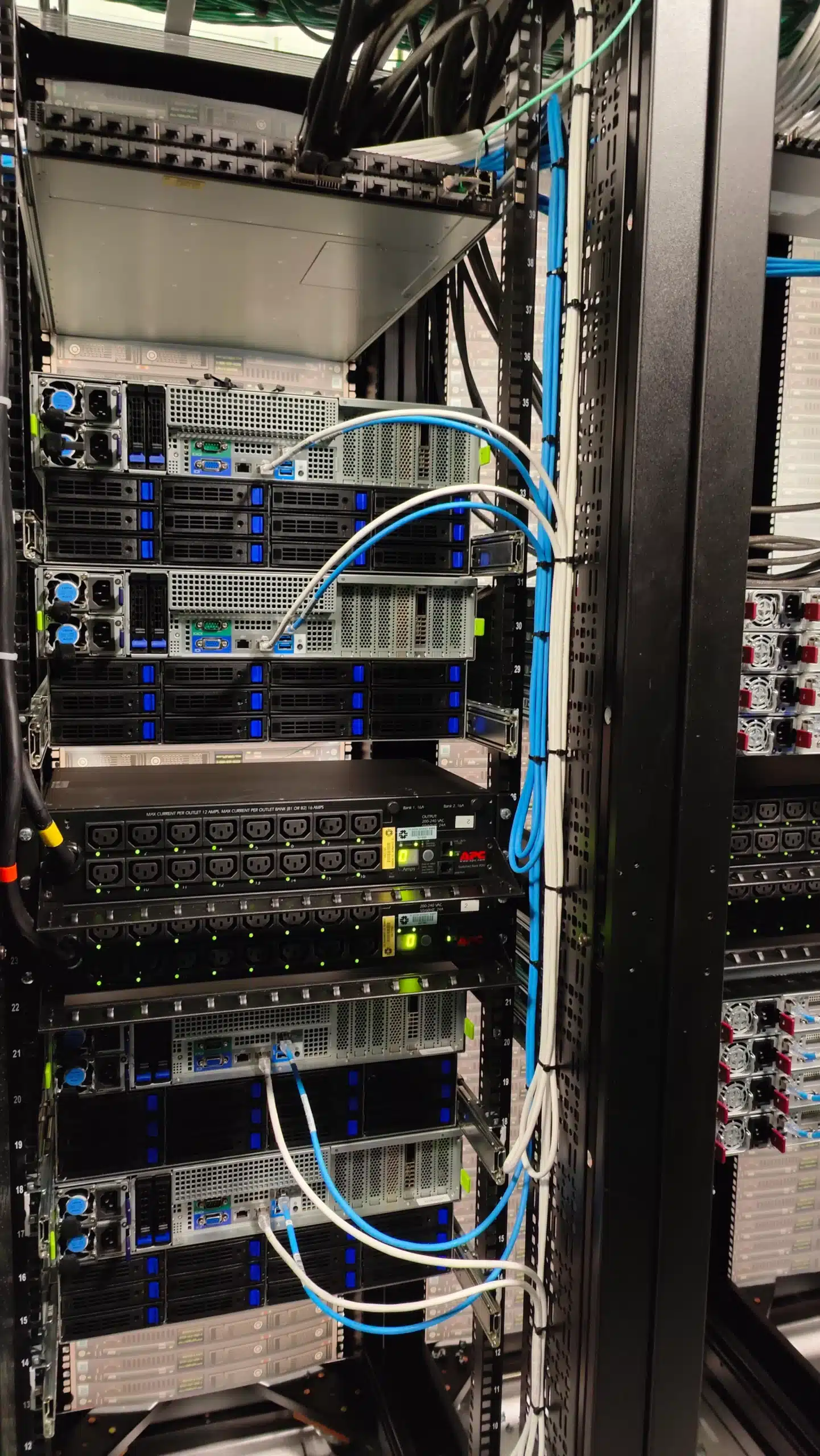
Facility work is often the step that is both entirely within the control of the program office and entirely ignored during a funding pause. Power circuits, cooling capacity, floor loading, rack space, network drops, and physical security controls do not depend on the compute award. They frequently take longer than the hardware does.

A program that walks into an appropriation with site readiness already complete has converted a sequential schedule into a parallel one. That is often the difference between accepting hardware in the current fiscal year and not.

The requirement does not go away

A constrained funding period does not make a compute requirement less real. The aging cluster is still aging. The training schedule still needs the device available. The analysis backlog still grows. What changes is the window in which money can be obligated, and that window tends to be short and crowded when it opens.

The programs that do well in that window are the ones that spent the constrained period doing everything except spending.


Ace Computers works with federal and higher education programs through full acquisition cycles, including configuration validation and lead time planning well before an award is possible. Early technical conversations cost nothing and shorten the part of the schedule that matters.