Home / Blog / Federal AI Infrastructure: Myths vs. Facts
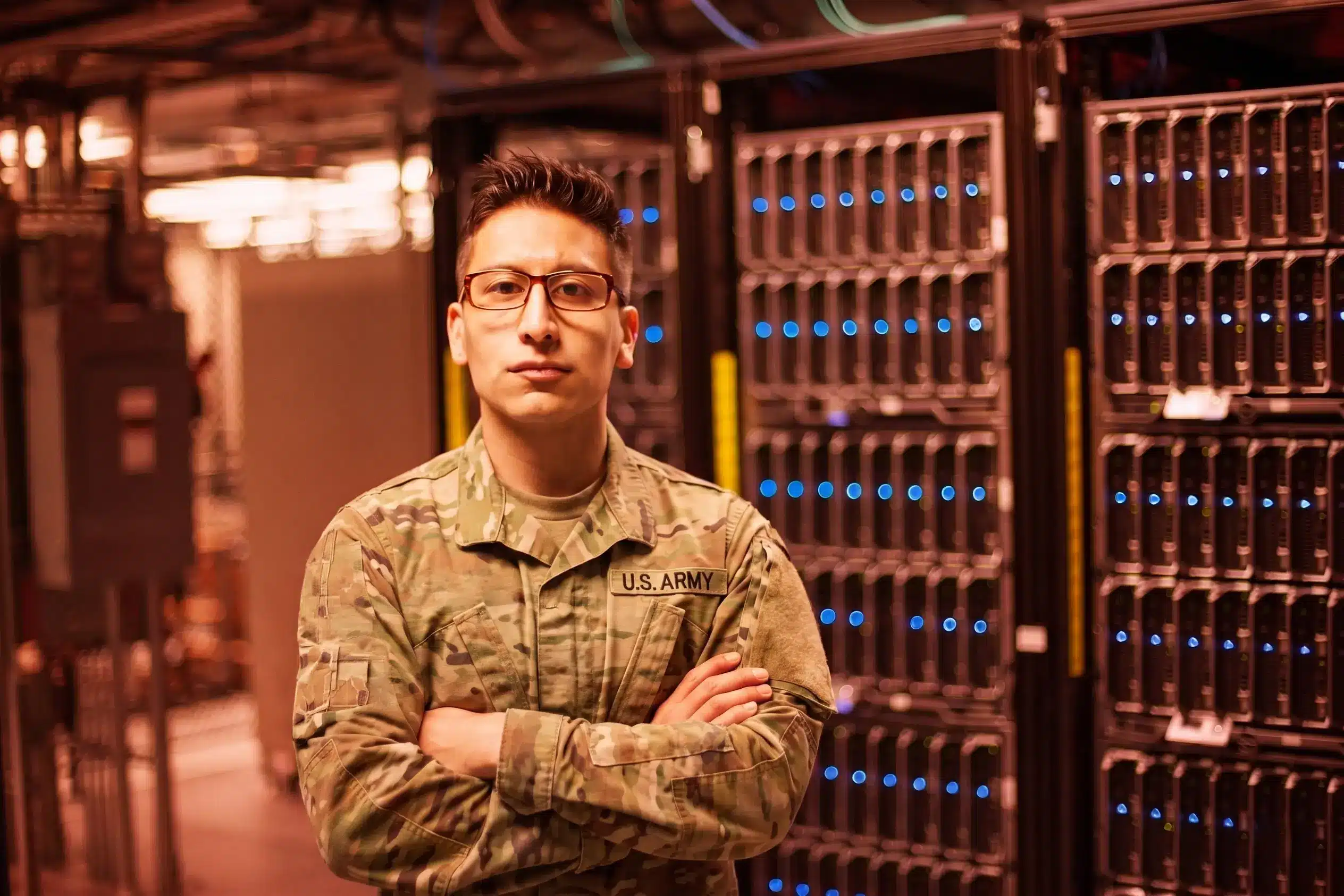
A person in a U.S. Army uniform stands with arms crossed in front of server racks in a federal or military data center.

Federal AI Infrastructure: Myths vs. Facts

Federal AI infrastructure procurement carries a lot of inherited assumptions, some outdated, some just wrong. Here are the misconceptions we hear most often, corrected.

View Ace Computers Federal and Government IT Solutions

Table of Contents

Myth 1: Cloud AI Infrastructure Is Always Cheaper Than On-Premises

MYTH


FACT

For sustained, predictable workloads, on-premises infrastructure frequently costs less over a multi-year period than continuous cloud compute charges, especially for GPU-intensive training workloads that run for extended periods. Cloud makes strong sense for bursty, unpredictable, or short-term workloads; it’s not a universal cost winner for every AI use case.

Myth 2: TAA Compliance Only Matters for Large Purchases

MYTH


FACT

TAA compliance requirements apply to federal hardware purchases above the micro-purchase threshold, a genuinely low bar. Buyers should treat compliance verification as standard practice for essentially every federal hardware acquisition, not a special step reserved for large-dollar purchases.

Myth 3: More GPU Interconnect Bandwidth Is Always Better

MYTH


FACT

HGX-tier interconnect bandwidth is essential for large-scale training but is unnecessary cost for inference-focused workloads, which process largely independently and don’t benefit from the added bandwidth. Matching GPU tier to actual workload communication patterns, not defaulting to the highest tier, is the more defensible procurement approach.

Myth 4: Zero Trust Is a Software and Policy Concern, Not a Hardware One

MYTH


FACT

OMB M-22-09’s Zero Trust requirements depend directly on hardware-level capabilities like TPM-based attestation and secure boot. Hardware that lacks these capabilities can create a control implementation gap discovered during formal assessment, regardless of how strong the surrounding software policy is.

Myth 5: Purchase Price Is the Best Way to Compare Vendor Quotes

MYTH


FACT

Organizations that evaluate on purchase price alone typically see total lifecycle costs run 40 to 60 percent higher once power, cooling, maintenance, and personnel are fully accounted for. A lower purchase price with higher power draw or maintenance overhead can easily cost more over a system’s service life than a higher-priced, better-matched configuration.

Myth 6: Export Controls Only Apply to International Shipments

MYTH


FACT

Deemed export rules can treat sharing controlled technical data with a foreign national as an export, even when no physical hardware ever leaves the country. Programs working with international personnel on AI systems should understand this obligation even for entirely domestic deployments.

Myth 7: Air Cooling Works Fine for Any AI Hardware Density

MYTH


FACT

Current-generation GPU racks can draw well over 100 kilowatts, far beyond what traditional air-cooled infrastructure was designed to dissipate. Many programs begin evaluating liquid cooling as density approaches 20 to 30 kilowatts, and air cooling generally reaches its practical limits above 50 kilowatts.

Myth 8: A Vendor's Spec Sheet Tells You What You Need to Know

MYTH


FACT

A system that meets specifications on paper can still underperform on your specific workload. Requiring factory acceptance testing or configuration validation before delivery catches mismatches between paper specifications and actual performance before they become deployment problems.

Wrap up:

If any of these corrections change how you’re thinking about an upcoming procurement, our federal engineering team is available to help work through the specifics.

Contact Ace Computers Federal Sales Team

Read the Complete Guide to Federal AI Infrastructure Procurement